
Last updated September 23, 2026
Free visual inspection and a written scope of work before any mitigation begins - photos, moisture readings, and drying logs go in your claim file
The scope we write is the scope we bill. Anything new gets shown to you, in writing, before we touch it.
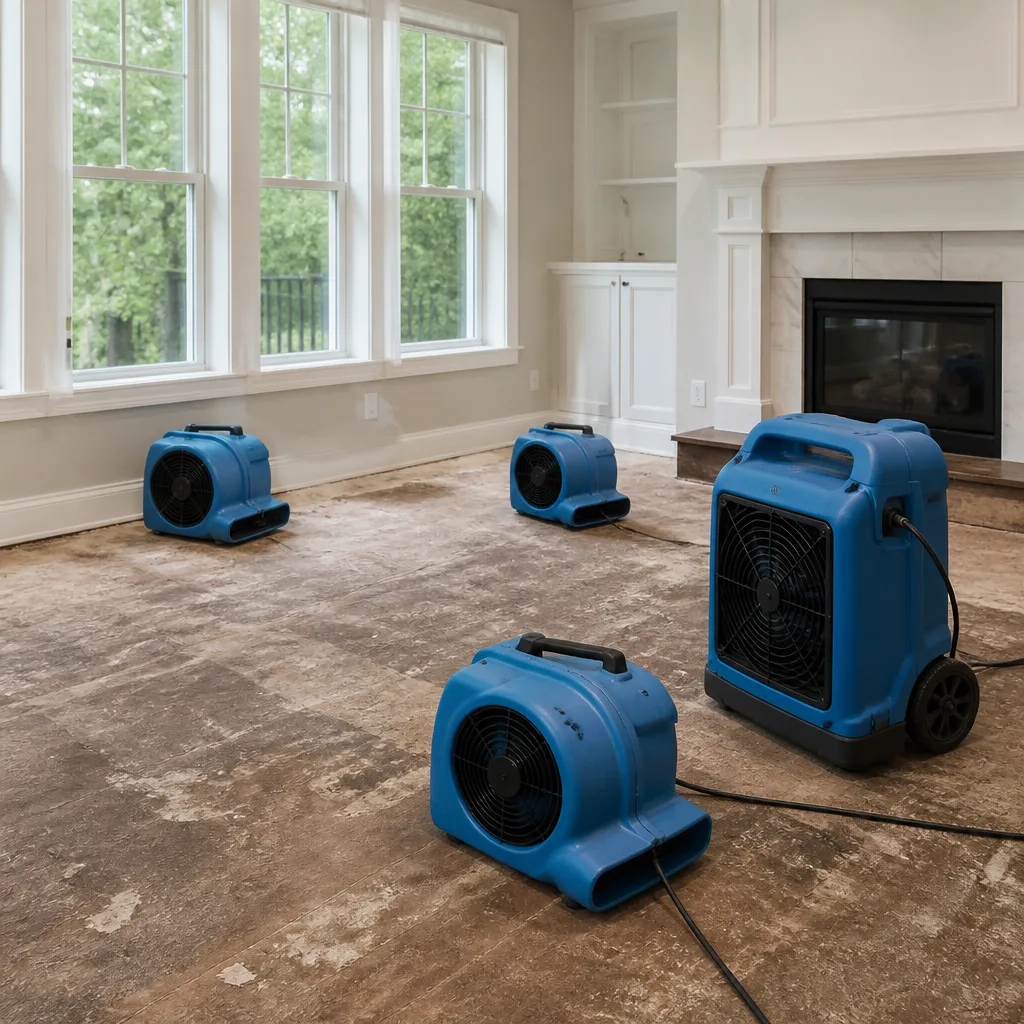

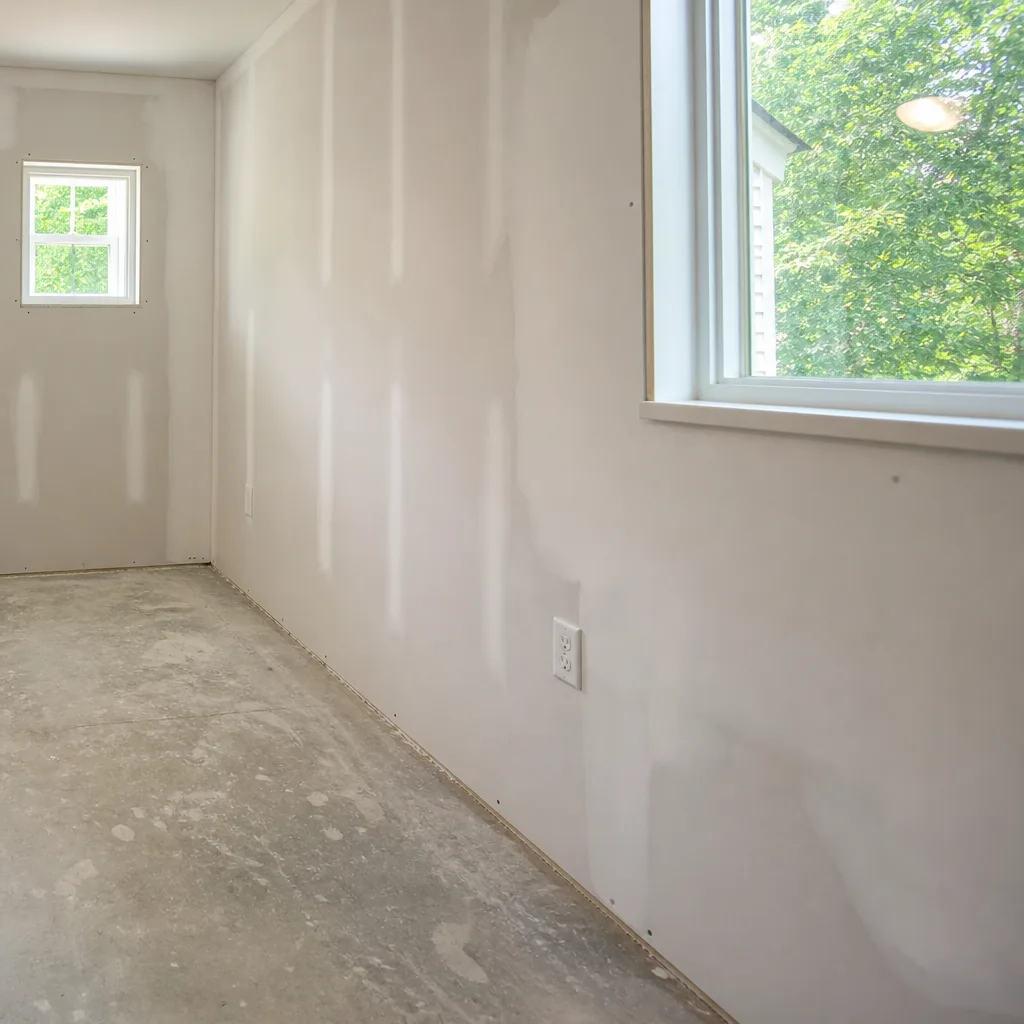
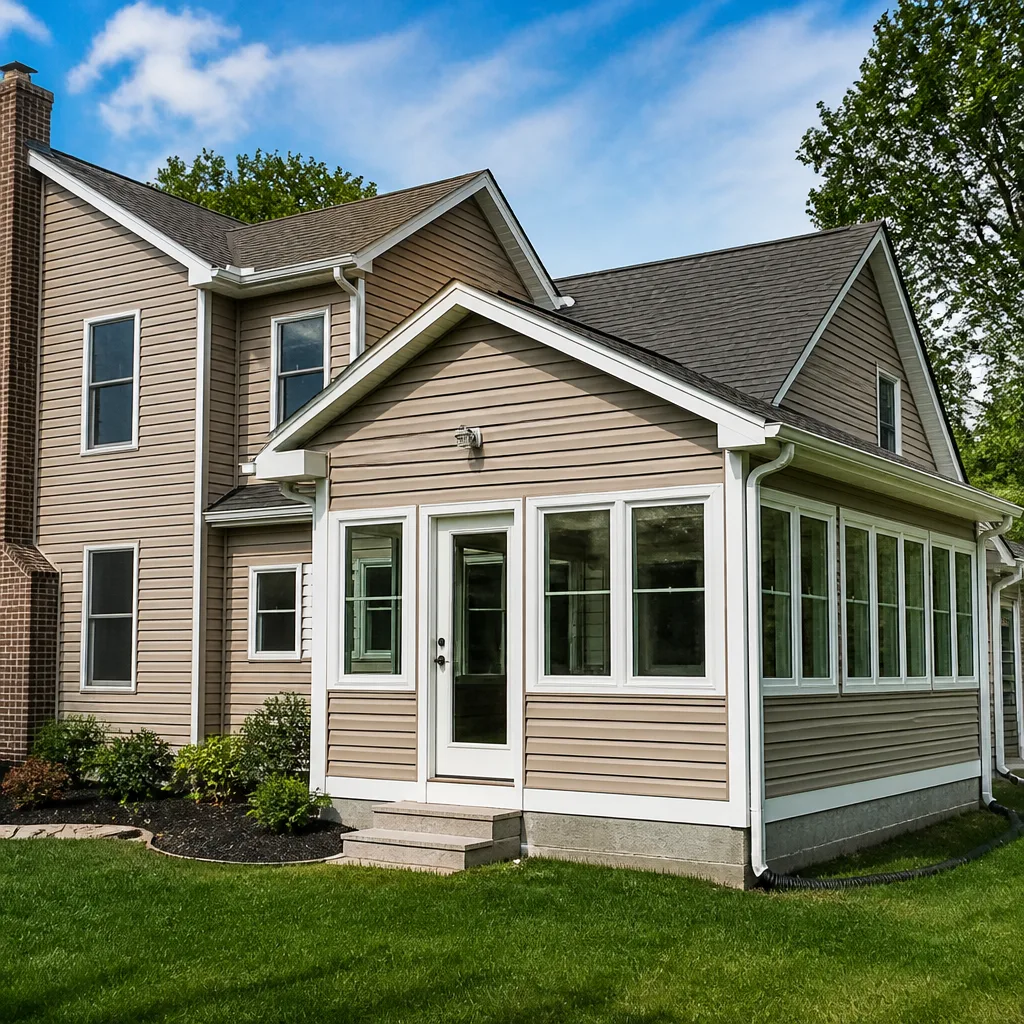
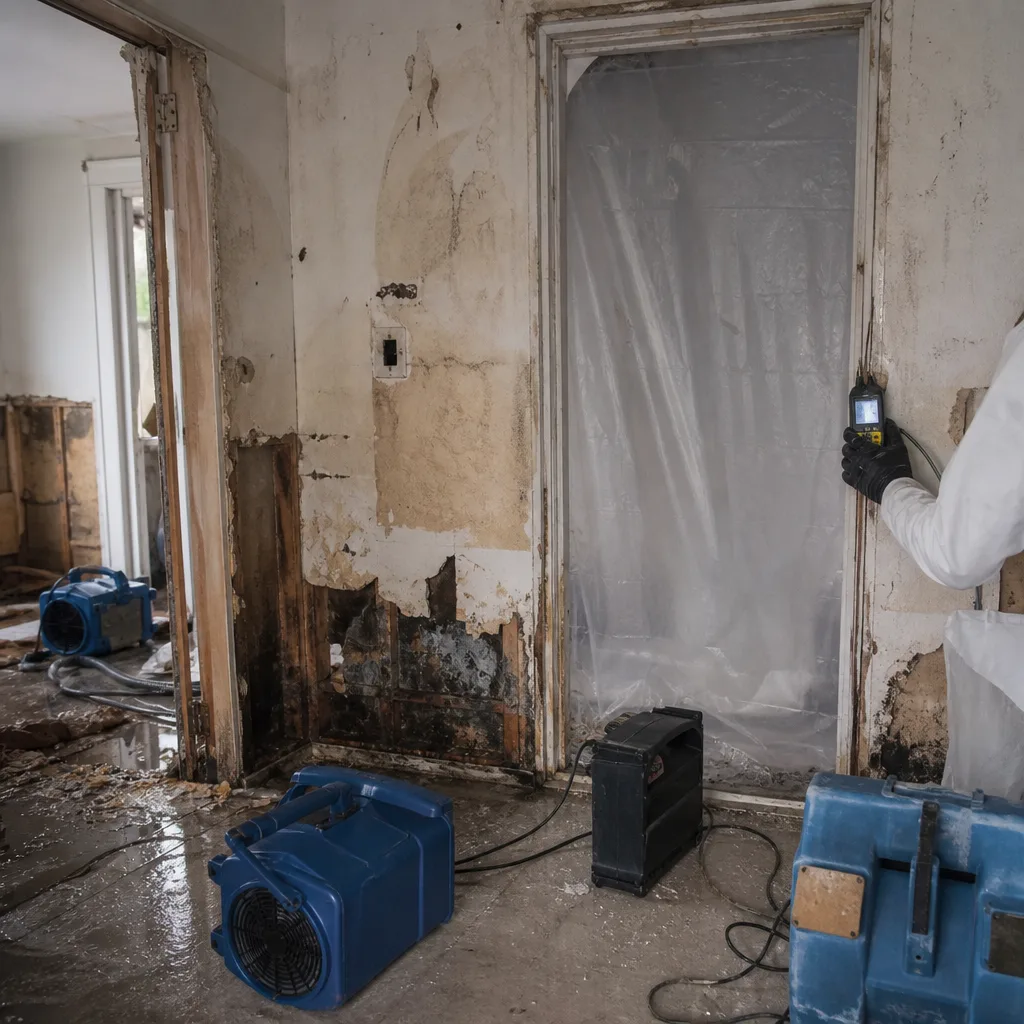 Before
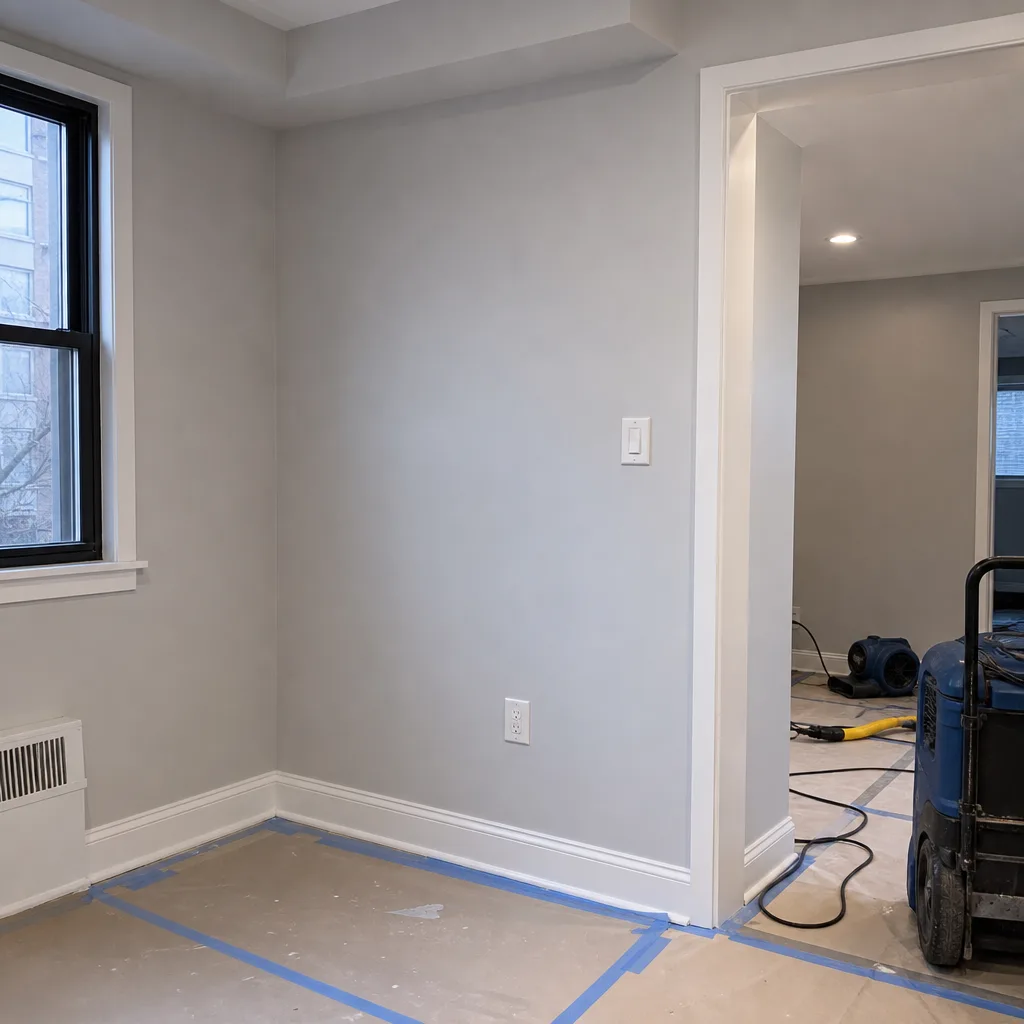 After
After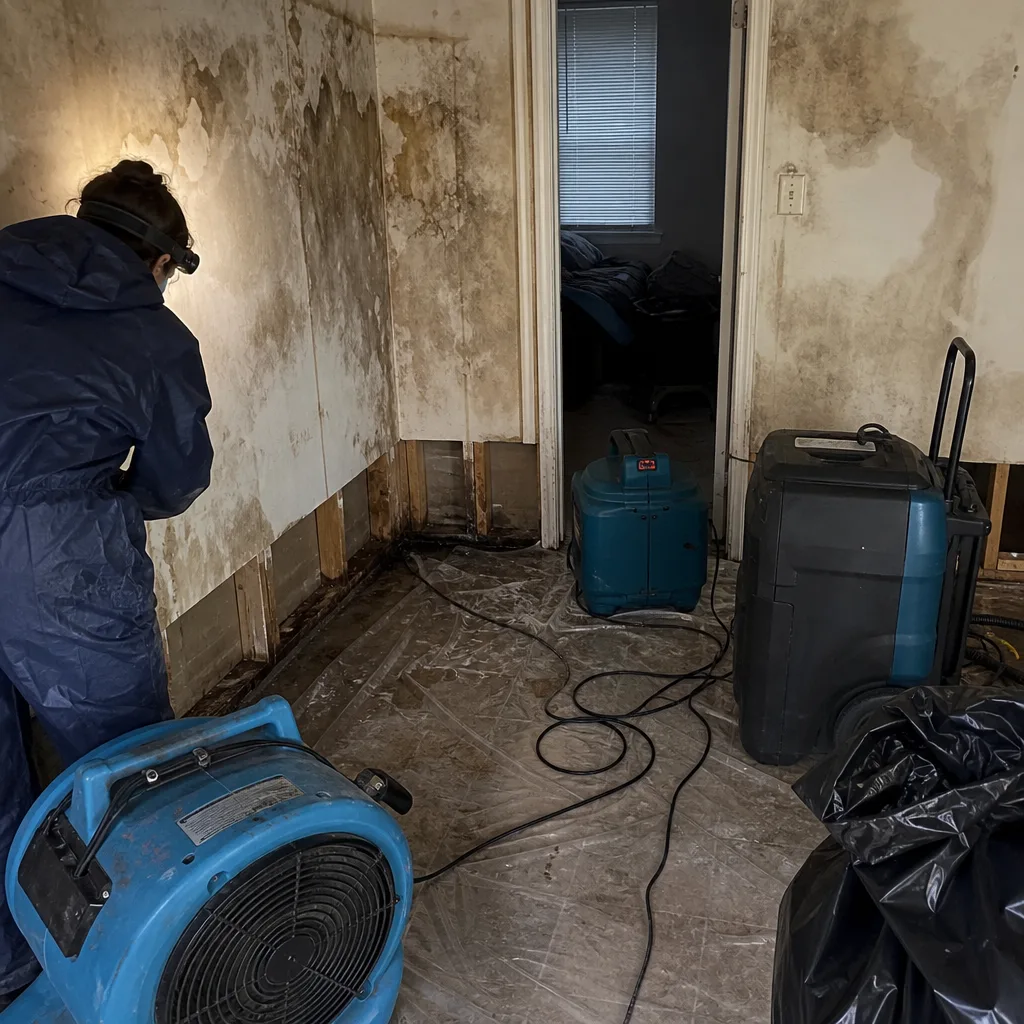 Before
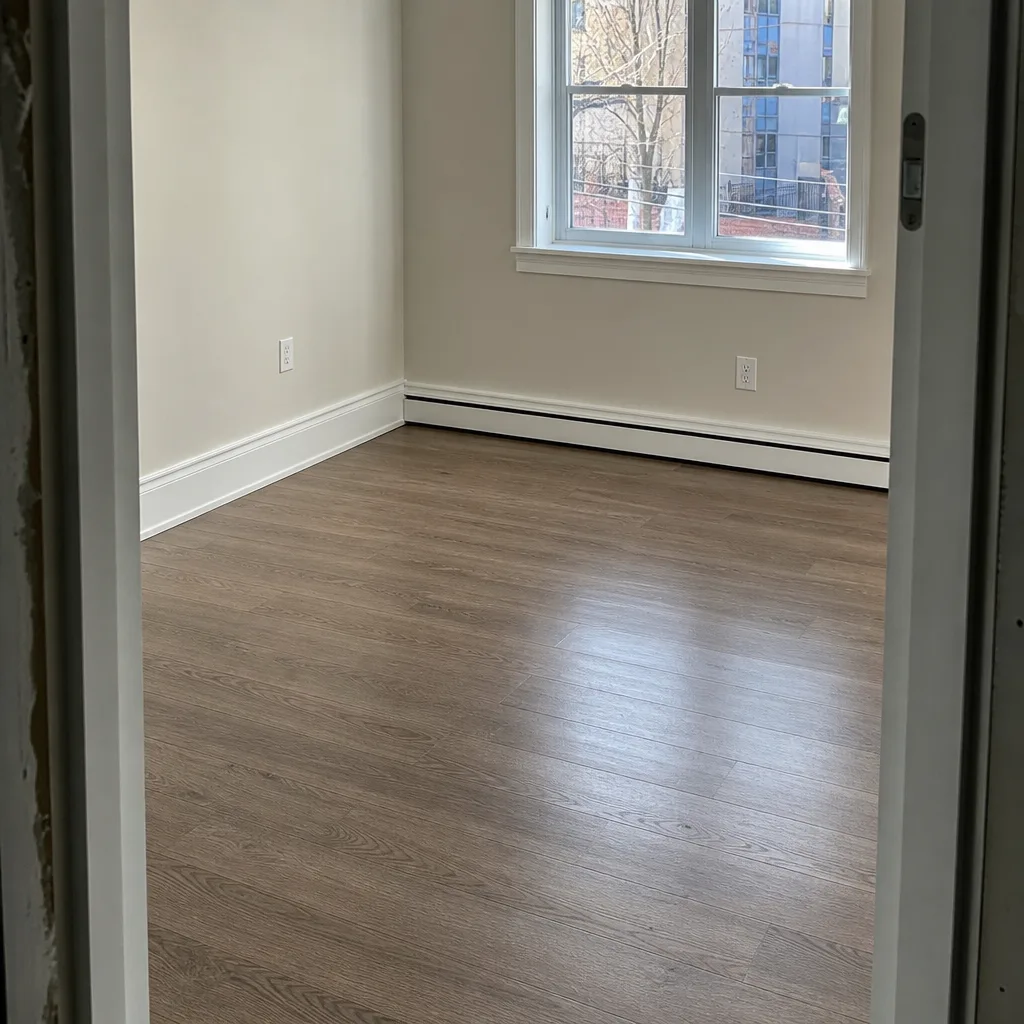 After
After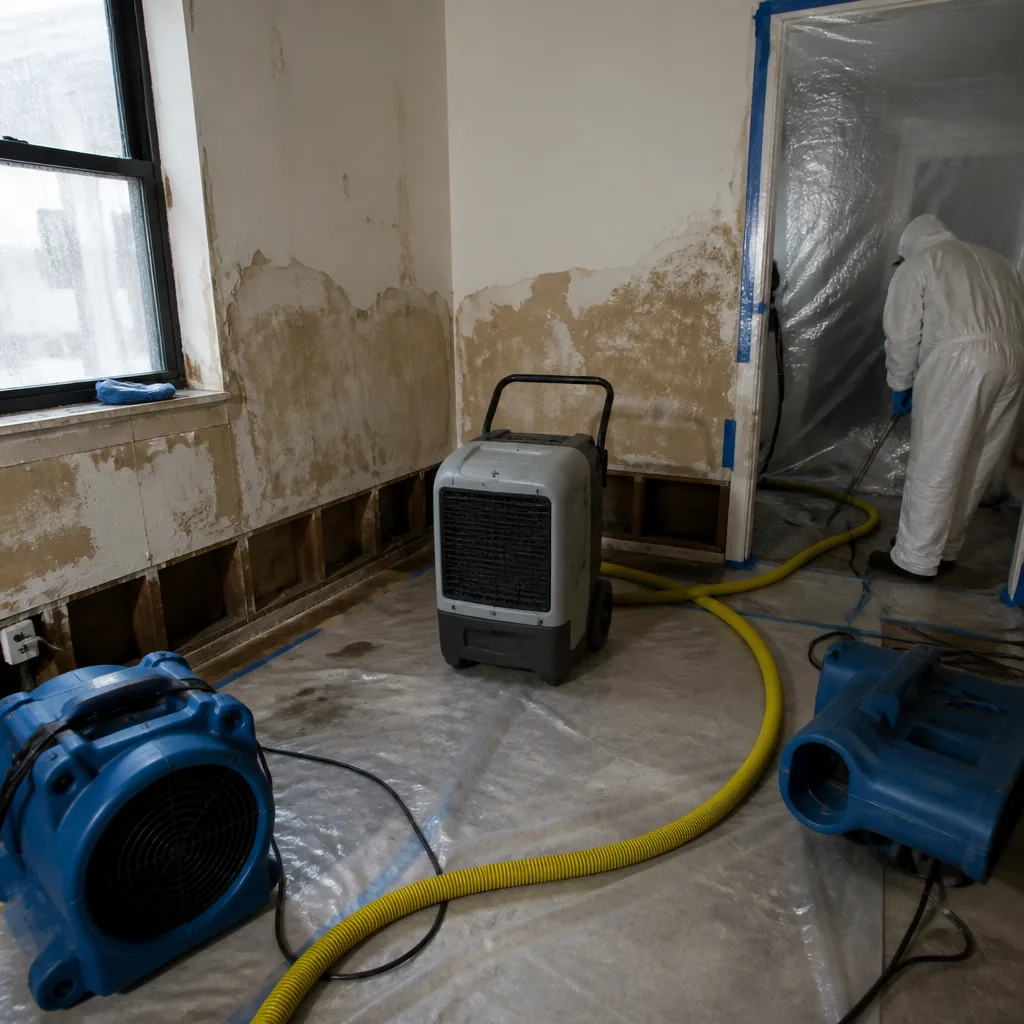 Before
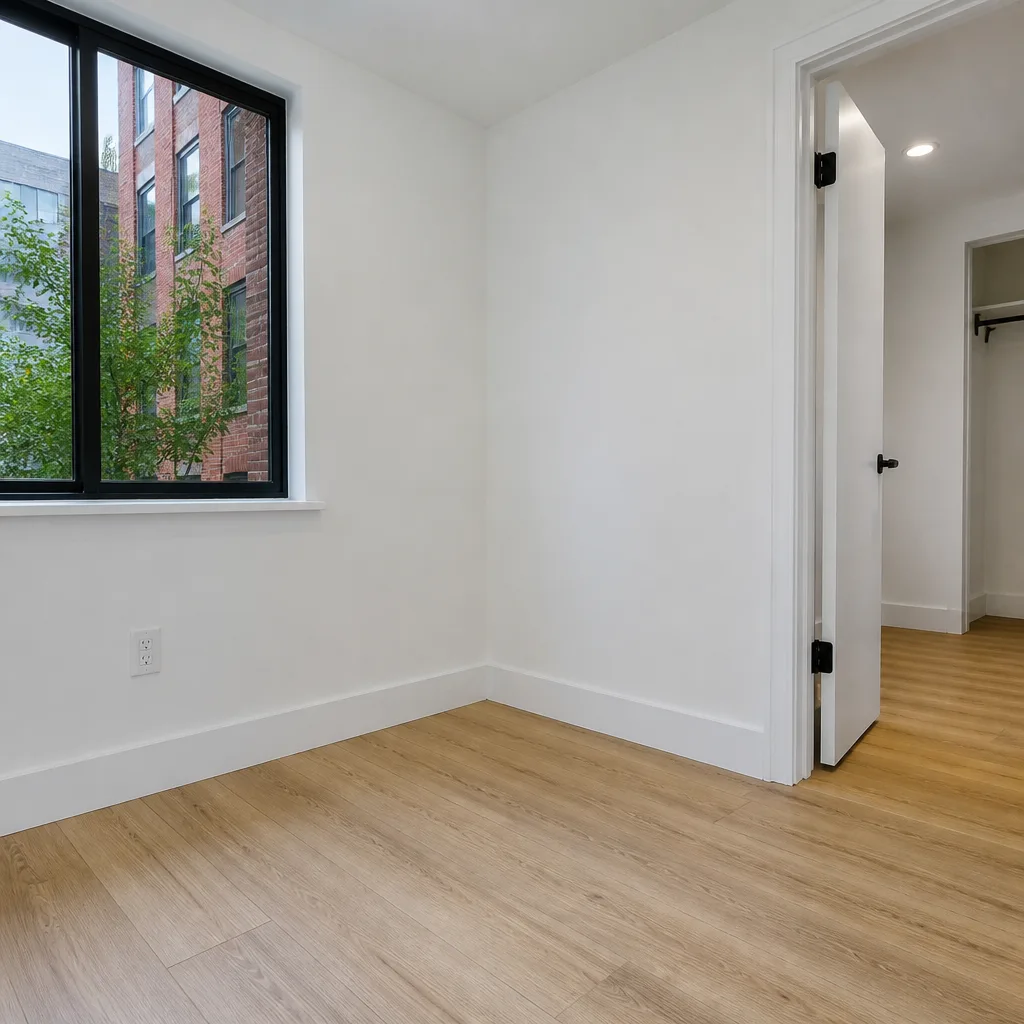 After
AfterThe Complete Guide to Damage Restoration in Long Island City
Most Long Island City homeowners don’t lose money on the damage itself. They lose it months later, at the desk of an adjuster who receives an invoice with no moisture logs, no photo timestamps, and no written scope to match it against. In our experience restoring properties across Queens since 2011, the difference between a fully paid claim and a denied one rarely comes down to the severity of the damage. It comes down to whether the restoration company documented the work well enough for a stranger at a desk to understand what was done, why it cost what it cost, and why it was necessary. This guide maps every phase of damage restoration through the lens of claim survivability, not speed. You’ll learn how Long Island City’s specific building stock creates unique drying challenges, what documentation chain protects your claim, and how to tell whether a contractor is building evidence or just running equipment.
Quick Answer
Damage restoration in Long Island City is the documented process of returning a property to its pre-loss condition after water, fire, mold, or biohazard events, with all work supported by written scopes, photo records, and moisture logs that satisfy insurer review. A successful restoration produces a complete documentation chain: initial assessment readings, daily drying logs, room-by-room photo timestamps, and a final clearance report at or below baseline moisture levels. Without this chain, even properly performed work can result in partial claim denials or out-of-pocket costs for Long Island City homeowners.
Table of Contents
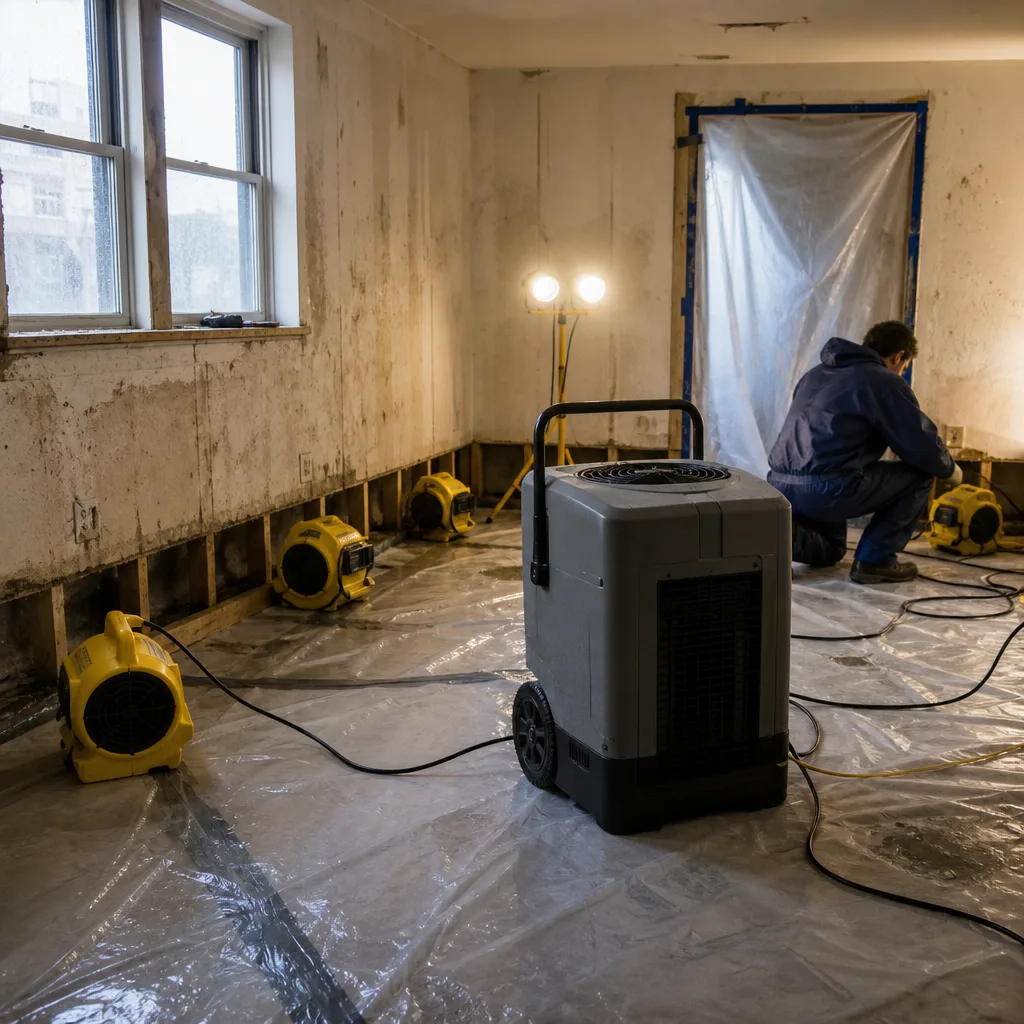
- Why Documentation Beats Speed in Long Island City Claims
- How Long Island City’s Building Stock Creates Unique Restoration Challenges
- The Documentation Chain That Makes or Breaks Your Claim
- Water Damage Restoration: What Actually Happens
- Mold Remediation in LIC’s Converted and Below-Grade Spaces
- Fire & Smoke Damage Restoration
- NYC DEP Permits, Con Edison Proximity, and Realistic Timelines
- Choosing Between a Verbal Estimate and a Written Scope
BeforeAfterWhy Documentation Beats Speed in Long Island City Claims
The restoration industry sells response time. We sell something slower and more valuable: a claim that gets paid.
Here’s what we’ve learned from 12,000+ homes restored since 2011. An adjuster reviewing a restoration invoice has three questions: Was the work necessary? Was the scope appropriate? Can you prove it? A crew that arrives in 30 minutes but leaves no moisture readings, no photo record, and no written scope has handed the homeowner a liability. The work might have been perfect. Without documentation, it’s indistinguishable from fraud.
Long Island City’s insurance landscape intensifies this pressure. The neighborhood’s rapid development, mixed-use zoning, and concentration of newer high-rises alongside pre-war stock means adjusters see a wide variance in claim types and costs. They’re skeptical by default. A $15,000 water mitigation invoice from a converted industrial loft on Jackson Avenue raises different questions than the same invoice from a garden apartment in Hunters Point. Documentation answers those questions before they’re asked.
The Haven Standard, which governs every job we take, was built around this reality. Haven Standard, Clause 1: a written price before any work starts, every time, with no exceptions. Not because homeowners want paperwork. Because paperwork is what turns a disputed invoice into a paid claim.
Speed matters for stopping damage. Documentation matters for stopping financial loss. The first is a mitigation concern. The second is a restoration concern. Competent companies manage both. In Long Island City, where building density complicates access and adjuster scrutiny runs high, the second determines whether the homeowner keeps their savings.
How Long Island City’s Building Stock Creates Unique Restoration Challenges
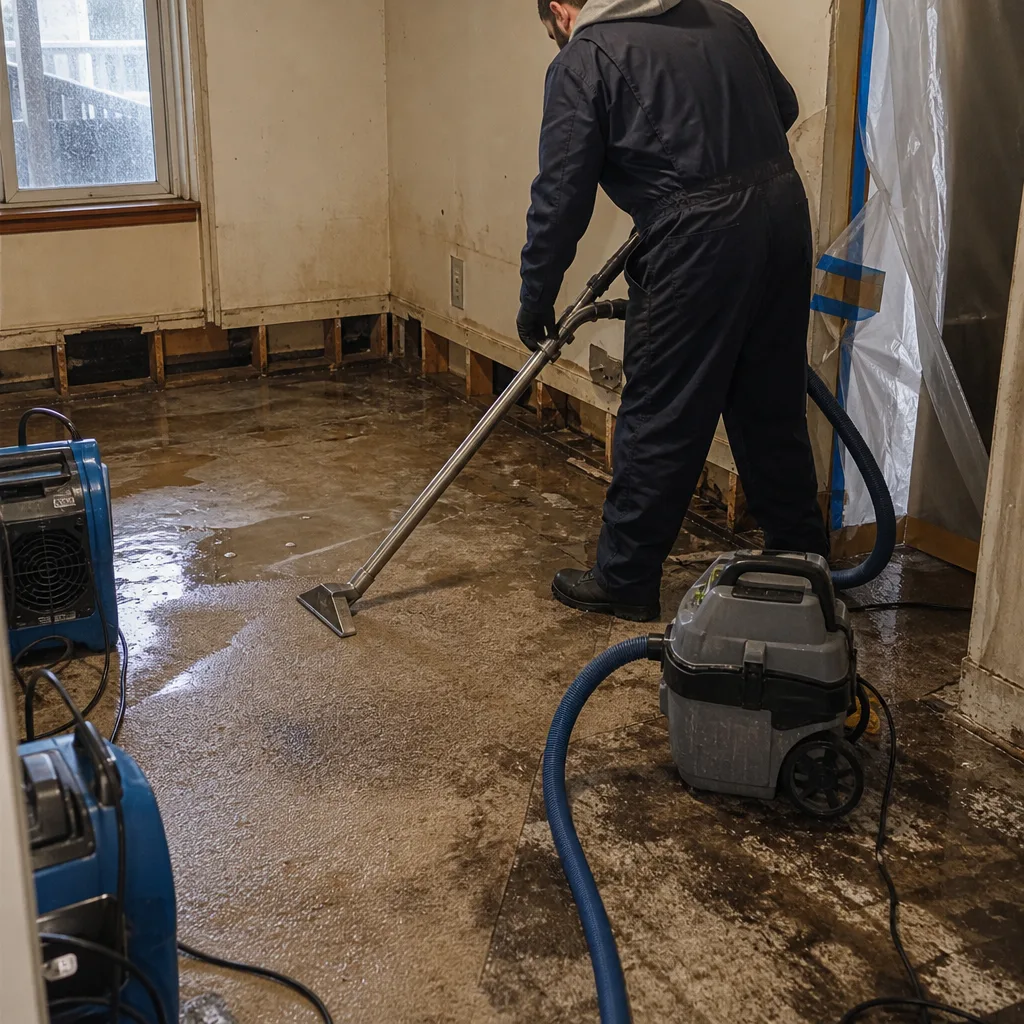
Long Island City isn’t built like Astoria or Forest Hills. Its restoration challenges are specific to its history as an industrial zone converted, block by block, into residential and mixed-use space.
Pre-War Brick Construction
Buildings constructed before 1940, common in the industrial core near the Queensboro Bridge approach, present a specific drying problem: brick and mortar assemblies act as reservoirs. We’ve extracted moisture readings above 20% from brick walls that appeared surface-dry to visual inspection. The moisture was held in the wythe cavities, migrating slowly toward interior finishes. Standard air mover placement, adequate for wood-frame construction, leaves these assemblies wet. Tertiary drying - the extended phase after primary extraction and secondary dehumidification - requires targeted heat injection systems, often from Injectidry or similar manufacturers, with monitoring intervals every 24 hours rather than the 48-hour standard.
Psychrometric data, the measurement of air temperature, relative humidity, and vapor pressure, tells us when brick has actually reached equilibrium. A foreman saying a wall “feels dry” is not a measurement. A vapor pressure differential reading within 10% of ambient, logged daily, is.
Converted Industrial Lofts
The loft conversions along Vernon Boulevard and 44th Drive introduced residential occupancy into structures never designed for it. Original concrete floors, often with no vapor barrier, wick groundwater upward. Original steel window frames, now sealed for energy code compliance, trap condensation. We’ve documented mold colonization in converted units where the HVAC system, sized for open industrial floor plates, creates negative pressure that pulls humid corridor air into wall cavities.
Restoration in these buildings requires understanding the original construction intent. A contractor who treats a 1920s warehouse like a 2015 condo will miss the moisture pathways.
Below-Grade and Garden Units
Long Island City’s topography, sloping toward the East River, creates persistent hydrostatic pressure on below-grade spaces. Garden apartments in buildings from the 1950s and 1960s, common in the residential blocks south of Queens Plaza, regularly show seepage through cold joints in foundation walls. The NYC DEP stormwater infrastructure, upgraded in phases across the neighborhood, still backs up during intense rainfall events. We’ve responded to sewage Category 3 losses in garden units after DEP mainline surcharges, particularly in buildings where laterals connect to combined sewers.
These units require specific moisture mapping: thermal imaging to identify seepage paths, calcium chloride testing for slab moisture vapor emission, and documented baseline readings before any drying equipment is placed. Without this, a drying log shows progress that never happened.
The Documentation Chain That Makes or Breaks Your Claim
Every restoration job produces evidence or it produces risk. Here’s the chain that satisfies insurer review, with the specific documents you should receive at each phase.
- Initial Assessment Report: Room-by-room moisture readings using calibrated pin and pinless meters, with readings recorded by material type (drywall, plaster, subfloor, framing species). Thermal imaging documentation of suspected moisture boundaries. Photo record with timestamps showing loss extent before any disturbance. Written scope of work with line-item pricing, delivered before equipment placement or material removal begins.
- Daily Drying Logs: Psychrometric readings (temperature, relative humidity, grains per pound) for each affected area, recorded at the same time daily. Equipment inventory by serial number: dehumidifiers (Dri-Eaz, Phoenix, or equivalent), air movers (B-Air or XPOWER), and any specialty systems (Injectidry cavity drying, negative air machines). Moisture content readings for each monitored material, with target goals specified. Technician signature and time stamp.
- Progress Photo Record: Date-stamped images of each affected room, showing equipment placement, material removal stages, and visible drying progress. These photos should correspond to drying log entries. A photo of a dehumidifier running proves nothing. A photo of a dehumidifier running with a visible hygrometer reading and a dated newspaper in frame proves the reading was real.
- Final Clearance Documentation: Moisture readings at or below baseline for all affected materials, with baseline defined as readings from unaffected areas of the same building or published equilibrium moisture content for the material. Photo record of restored condition. Written completion statement with technician attestation. 365-Day Done Right Promise documentation under The Haven Standard.
Gaps in this chain are where claims die. A daily drying log with three days missing? The adjuster assumes those days weren’t worked. A final clearance with no baseline comparison? The reading is meaningless. A photo record with no timestamps? It’s inadmissible in dispute.
We deliver this chain on every job. Not because insurers ask for it upfront. Because when they ask six months later, the homeowner who has it gets paid. The homeowner who doesn’t gets a letter requesting “additional documentation” that no longer exists.
Water Damage Restoration: What Actually Happens
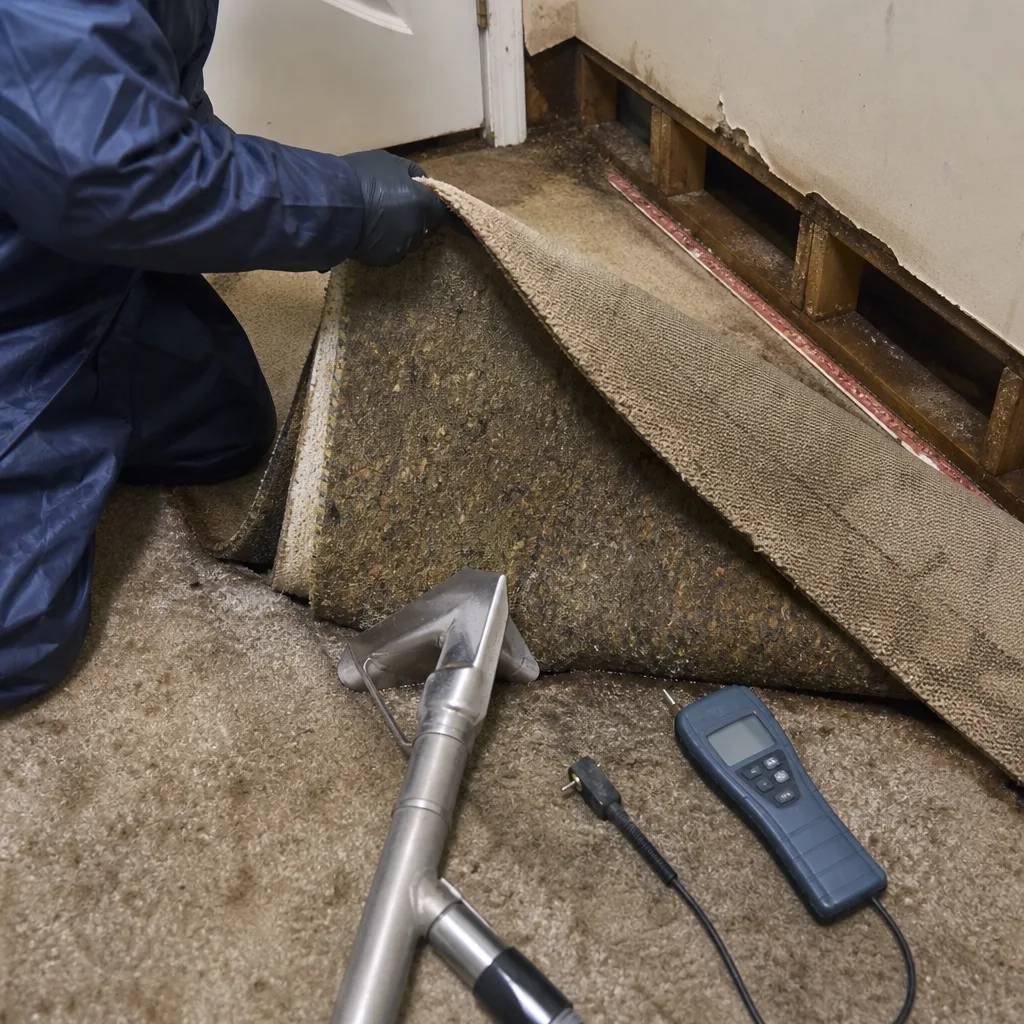
Water damage restoration in Long Island City follows a defined protocol, but the execution varies dramatically based on building type, water category, and whether the contractor is documenting or just extracting.
Category 1: Clean Water
Broken supply lines, overflowing sinks, rainwater intrusion. The water contains no significant contamination. The clock starts immediately: microbial growth can begin within 48-72 hours in Long Island City’s summer humidity, faster in poorly ventilated converted lofts.
Our process: Extract standing water with truck-mounted or portable systems. Remove unsalvageable materials (typically carpet pad, saturated insulation, baseboard). Place dehumidification and air movement equipment sized to the affected cubic footage. Monitor daily with documented moisture readings. Category 1 can become Category 2 or 3 if left untreated; the documentation proves which category applied at each stage.
Category 2: Gray Water
Dishwasher discharge, washing machine overflow, sump pump failures. Contains chemical or biological contaminants requiring antimicrobial treatment. Material removal is more aggressive: carpet and pad are typically discarded, not dried in place.
Category 3: Black Water
Sewage backup, flooding from seawater or rising ground water, Category 2 left untreated for 72+ hours. This is where documentation becomes critical for health and financial protection. All affected porous materials must be removed. Hard surfaces require cleaning with EPA-registered disinfectants, then drying. Antimicrobial treatment is documented by product name, concentration, and application method.
In Long Island City, Category 3 events often involve DEP infrastructure. We’ve documented sewage losses traced to combined sewer overflow during heavy rain. The documentation chain includes not just our work, but the DEP incident report number, which supports the homeowner’s claim that the loss was not due to maintenance neglect.
Safety note: Category 3 water contains pathogens that can cause serious illness. Do not attempt cleanup without proper PPE and containment. The health risk is real, and insurer liability for self-performed remediation is limited.
Equipment and Standards
Our drying systems are documented to IICRC S500 standards for water damage restoration. Equipment includes LGR dehumidifiers from Dri-Eaz and Phoenix, air movers from B-Air and XPOWER, and specialty cavity drying systems from Injectidry for the brick and plaster assemblies common in Long Island City’s older buildings. The equipment list, with serial numbers, appears in your daily drying log.
Mold Remediation in LIC’s Converted and Below-Grade Spaces
Mold remediation in Long Island City requires understanding why mold grows here specifically. The neighborhood’s building stock creates conditions that standard remediation protocols, designed for suburban wood-frame construction, often miss.
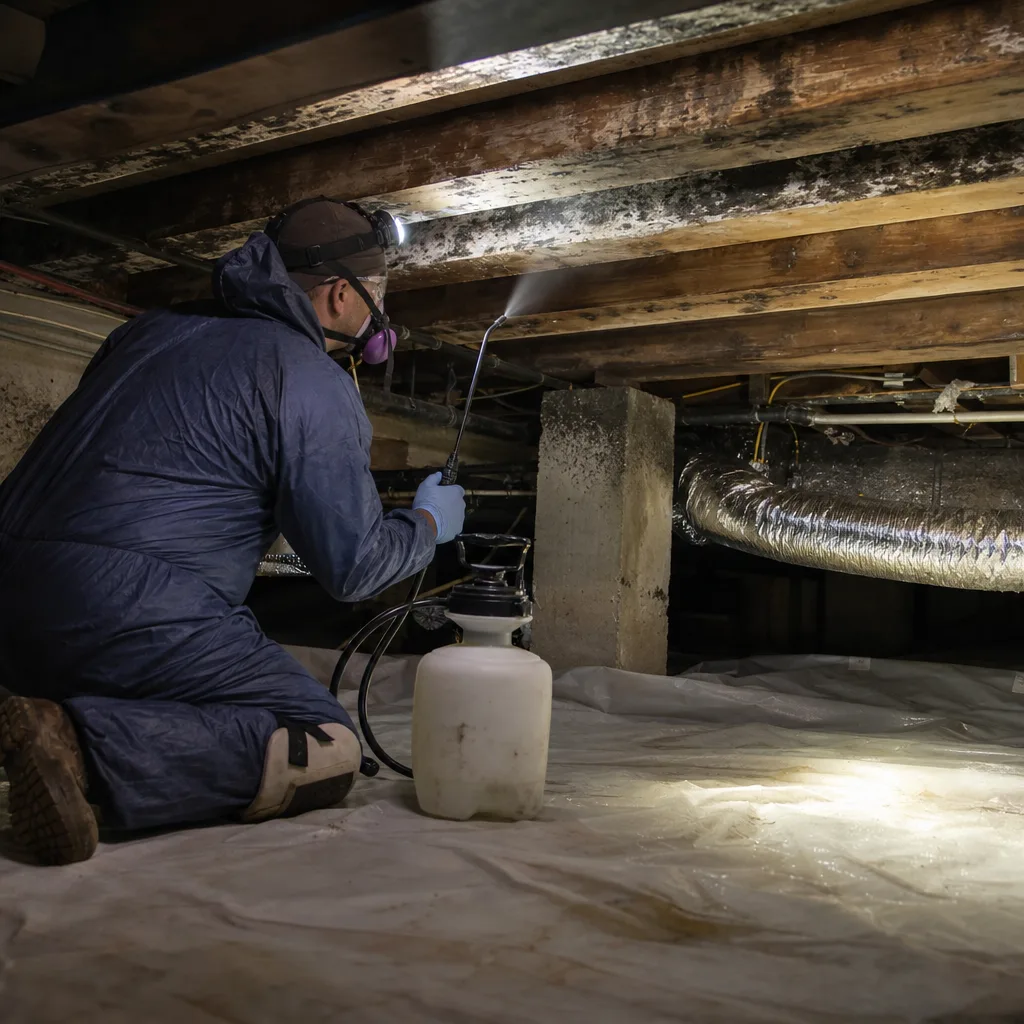
In converted industrial buildings, mold frequently colonizes in hidden cavities: the gap between original brick and new drywall, the space above dropped ceilings that conceal original structural members, the mechanical chases that once served factory equipment. Surface remediation - HEPA vacuuming and antimicrobial treatment of visible growth - leaves these reservoirs intact. We’ve been called to remediate units where two previous contractors “treated” visible mold, only for it to return within months because the source moisture in the cavity was never addressed.
Below-grade units face a different challenge: chronic humidity rather than acute water intrusion. Mold in these spaces often indicates a ventilation or vapor barrier failure, not a single leak. Effective remediation requires identifying the moisture source: hydrostatic pressure through the slab, condensation on uninsulated ductwork, or negative pressure pulling humid air from corridors.
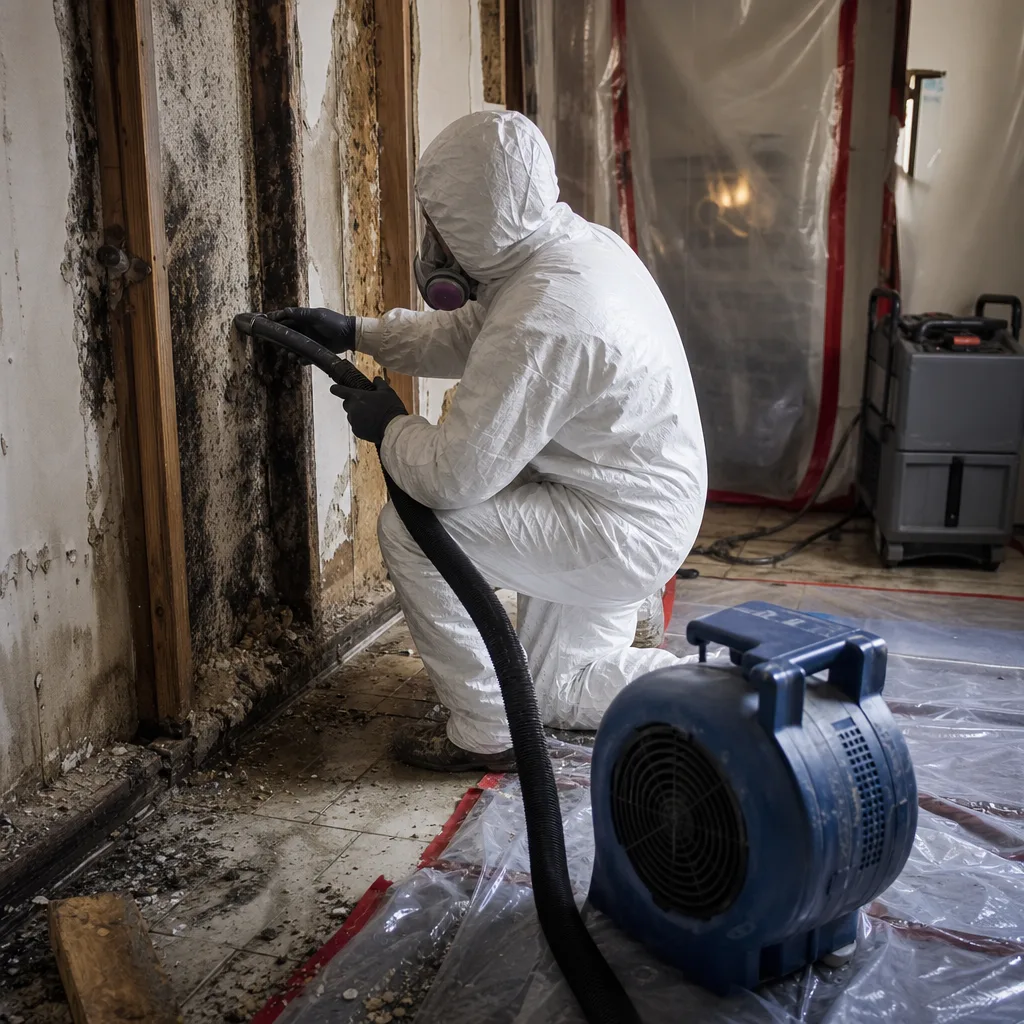
Our remediation protocol includes:
- Containment with negative air pressure to prevent cross-contamination
- HEPA filtration during all disturbance activities
- Removal of colonized materials, with disposal documented by weight and destination
- Antimicrobial treatment of remaining structural materials, with product and concentration logged
- Drying to below 60% relative humidity or material-specific moisture content targets
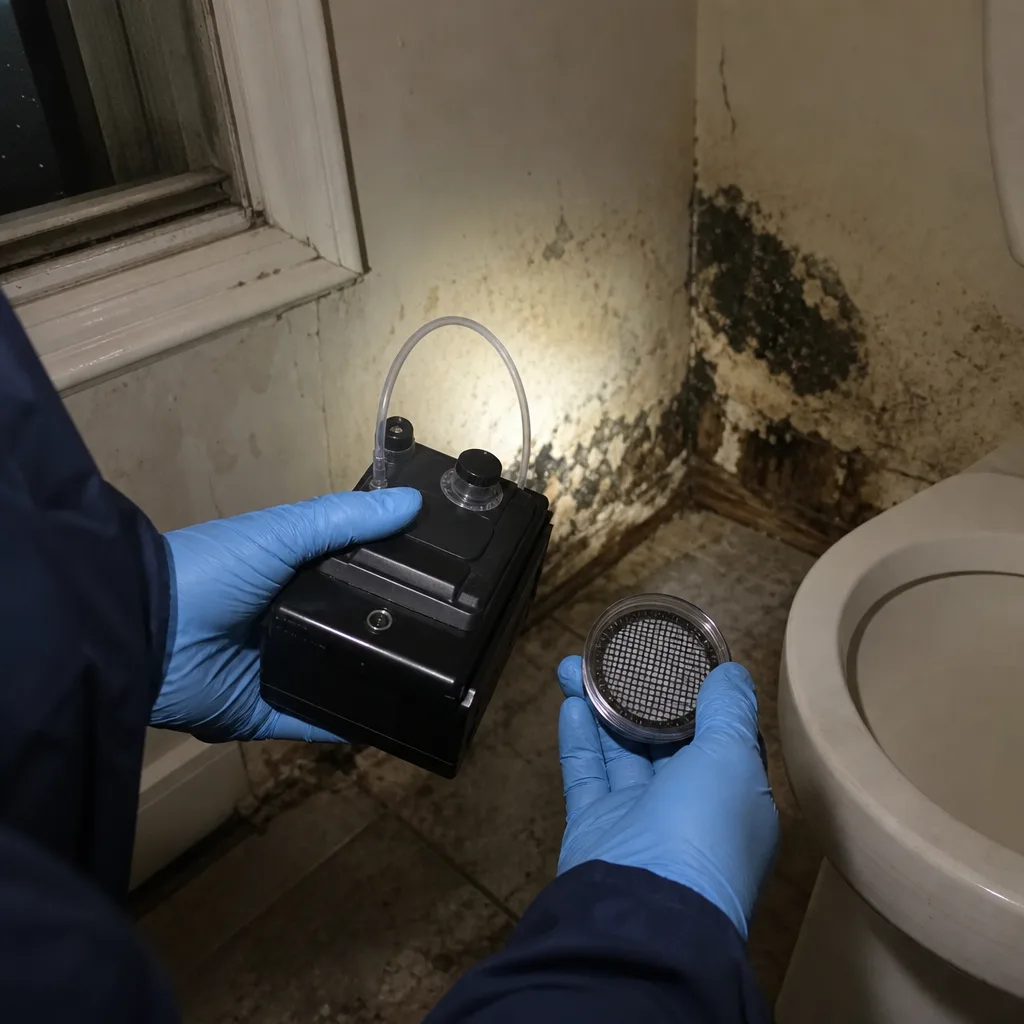
- Post-remediation verification: visual inspection, moisture readings, and air sampling where indicated
The Haven Standard requires that remediation completion be defined by measurement, not appearance. “Looks clean” is not a clearance criterion. Documented moisture readings at or below baseline, with photo evidence, is.
Important: Disturbing mold colonies without proper containment releases spores at concentrations that can cause respiratory irritation and, in sensitive individuals, more serious reactions. Do not attempt removal of areas larger than 10 square feet without professional containment and respiratory protection.
Fire & Smoke Damage Restoration
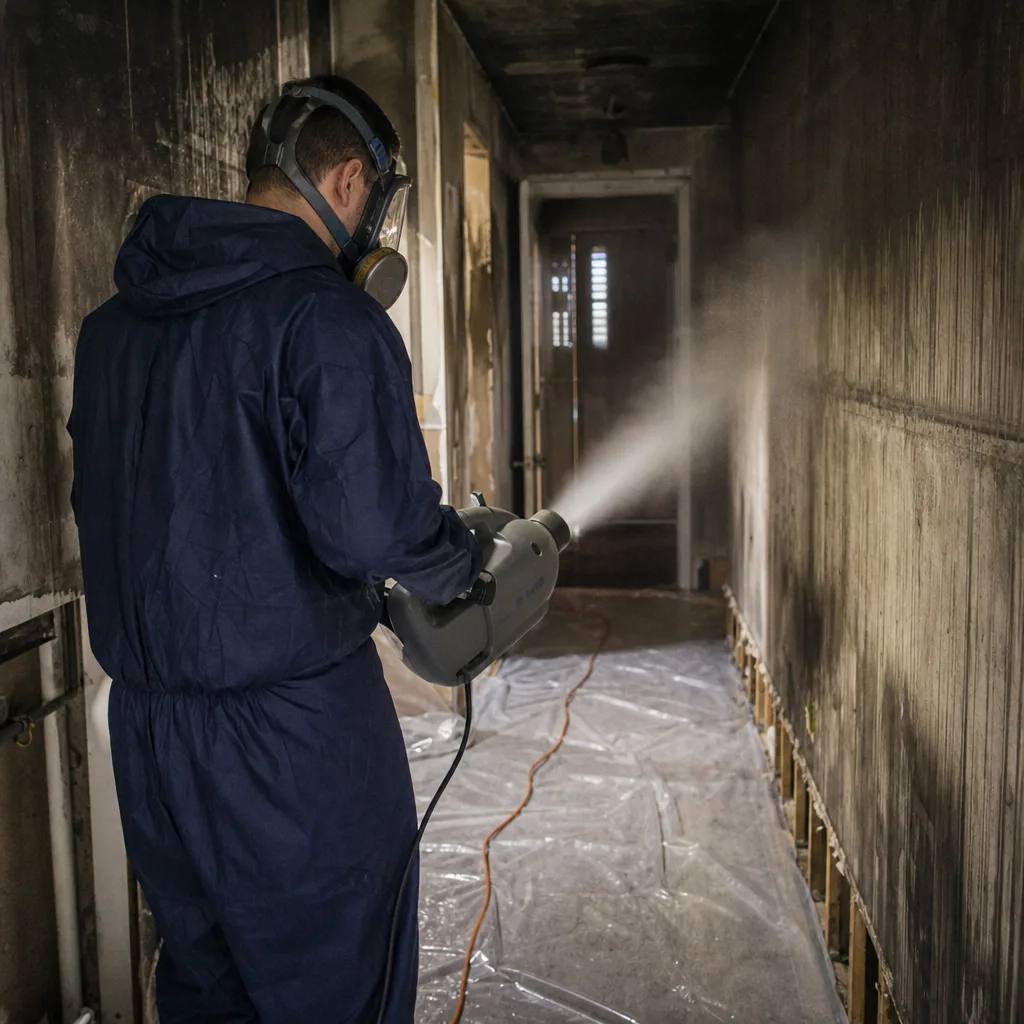
Fire and smoke damage restoration in Long Island City presents distinct challenges in a neighborhood where buildings share walls, HVAC systems interconnect, and occupancy types mix residential with commercial.
Structure fires in multi-unit buildings produce smoke migration patterns that single-family home protocols don’t address. We’ve documented smoke damage in units three floors from the fire origin, carried through elevator shafts and HVAC risers. The restoration scope must include not just the fire unit, but pressure testing of adjacent spaces and inspection of common systems.
Smoke residue types determine cleaning protocol:
- Dry smoke (fast-burning, high-heat fires): powdery residue, HEPA vacuumable before wet cleaning
- Wet smoke (slow-burning, low-heat fires): sticky, smeary residue requiring solvent-based cleaning
- Protein residue (kitchen fires): nearly invisible, extremely pungent, requires enzyme cleaners
- Fuel oil soot (furnace puff-backs): oily, difficult to remove, often requires thermal fogging or ozone treatment
In Long Island City’s mixed-use buildings, commercial kitchens in ground-floor spaces can produce protein residue fires that affect residential units above. The odor complaints arrive days later, when the invisible residue has adsorbed into porous materials. Documentation of odor source and migration path supports the claim that residential unit damage was fire-related, not pre-existing.
Contents restoration requires itemized inventory with photo documentation. Our process produces a room-by-room list with condition assessment, cleaning method, and disposition. This inventory is shared with the adjuster, not kept in our files only.
Reconstruction after fire damage is scoped and scheduled, not dispatched for same-day service. The urgency is in mitigation: board-up, water extraction from suppression systems, initial deodorization. Rebuild work proceeds after written scope agreement, with the same documentation standards applied.
NYC DEP Permits, Con Edison Proximity, and Realistic Timelines
Restoration timelines in Long Island City are shaped by infrastructure constraints that suburban contractors rarely encounter. Understanding these constraints prevents the frustration of promised deadlines that can’t be met.
NYC DEP Permits
Water damage involving sewer lines, water main connections, or subsurface drainage may require DEP permits for excavation or line work. The DEP permit process in Queens typically takes 3-5 business days for standard requests, longer for emergency work that requires traffic control plans. A contractor who promises same-day sewer line repair without mentioning DEP involvement is either uninformed or planning unpermitted work that will complicate your claim; see our Damage Restoration Permits, Codes & Inspections in NY: What You Need to Know for what proper permitting looks like.
We’ve coordinated DEP permits for sewage backup losses in Long Island City buildings where the lateral connection to the city main was damaged. The documentation chain includes the permit application, inspection results, and final sign-off - all necessary for insurer reimbursement of the excavation cost.
Con Edison Proximity
Long Island City’s electrical infrastructure, upgraded to serve new high-rise development, creates both advantages and complications. Con Edison response for electrical damage assessment is typically faster than in outer Queens. However, work near Con Edison vaults, transformers, or primary distribution requires Con Edison clearance that can add 24-48 hours to restoration startup. We’ve documented fire damage losses where electrical service restoration was delayed by Con Edison transformer inspection, extending the temporary power and drying equipment rental period. The extended timeline, with Con Edison correspondence, was accepted by the insurer because it was documented and explained.
Building Access and Density
High-rise buildings in the Court Square and Hunters Point South areas require loading dock reservations, freight elevator scheduling, and after-hours access permits. A contractor accustomed to suburban drive-up access will underestimate the logistics. Our project documentation includes access coordination records, because time spent waiting for elevator access is billable time that requires explanation.
Choosing Between a Verbal Estimate and a Written Scope
This is the decision that determines whether your restoration produces a paid claim or a dispute. The difference is not semantic. It’s structural.
A verbal estimate is a number spoken or texted, with no itemization, no material specifications, and no signature, as detailed in our Damage Restoration Cost Breakdown: The Long Island City Homeowner’s Reference for 2026. It cannot be compared to the final invoice. It cannot be submitted to an insurer for pre-approval. It provides no protection against scope creep - the gradual addition of charges once work is underway and the homeowner is committed.
A written scope, delivered before any work begins, is a defined document. It specifies: the rooms affected, the materials to be removed or restored, the equipment to be deployed, the drying targets, the labor hours estimated, and the total price. It requires homeowner signature before work starts. Any change requires a written change order, also signed.
Haven Standard, Clause 1: written price before work begins, every time, with no exceptions. This is not a marketing preference. It is the documentation foundation that makes every subsequent document - drying logs, photo records, final invoice - refer back to an agreed baseline.
We’ve reviewed competitor estimates for our Free Second Opinion service that listed “water mitigation: $8,500” with no further detail. An adjuster receiving that invoice has no basis to evaluate it. The same job, with a written scope itemizing extraction, 12 air movers, 3 dehumidifiers, 6 days of monitoring, and material removal by square footage, is payable because it’s auditable.
When evaluating contractors in Long Island City, ask specifically: “Will I receive a written scope with line-item pricing before any equipment is placed?” A yes with hesitation is a no. A no with explanation is a no. Only a yes with documentation produces the chain that protects your claim.
Common Mistakes to Avoid
- Accepting a verbal estimate for emergency work. The urgency of water or fire damage creates pressure to start immediately. A contractor who won’t document the scope before starting is building risk into your claim. In Long Island City’s high-scrutiny insurance environment, undocumented emergency work is often partially denied.
- Assuming “dry to the touch” means restoration complete. We’ve tested walls in Long Island City lofts that felt dry to homeowners but registered 18% moisture content in pin meter readings - well above the 12% target for interior wood framing. Without documented clearance readings, mold risk remains and insurer sign-off is impossible.
- Not requesting the daily drying log during the job. Some contractors treat drying logs as internal documents. They’re your documents. Request them at completion, or better, receive them daily by email. Gaps discovered after equipment removal can’t be reconstructed.
- Hiring a general contractor for Category 3 water or mold remediation. General construction skill does not equal restoration protocol knowledge. IICRC certification for water damage and mold remediation exists because the documentation, safety, and technical requirements are specific. A GC who builds well may document poorly.
- Neglecting to document pre-existing condition. In Long Island City’s competitive real estate market, many units have been recently renovated. Photo documentation of condition before restoration work protects against disputes about whether damage was pre-existing. We photograph every room, every time, before touching anything.
- Waiting for insurer approval before starting mitigation. Most policies require reasonable and necessary mitigation to prevent further damage. Waiting for written approval can convert a Category 1 loss to Category 2 or 3, increasing cost and complication. Start mitigation, document everything, submit with the documentation chain.
When to Call a Professional
Call for professional assessment when: water has affected more than a single small room; you smell mold but cannot locate the source; any fire has produced visible smoke residue or persistent odor; sewage or gray water is involved; or the damage affects common building systems or adjacent units. In Long Island City’s multi-unit buildings, damage often extends beyond visible boundaries through shared walls, HVAC, or plumbing risers.
DryMark Restoration Long Island City offers free estimates in Long Island City - call (914) 530-9723. Every estimate includes a written scope before any work begins, documented to Haven Standard, Clause 1. We also provide a Free Second Opinion on any competitor’s written estimate, with no obligation.
Frequently Asked Questions
Water damage mitigation in Long Island City typically ranges from $1,200 for contained clean-water extraction in a single room to $8,500+ for whole-unit Category 3 remediation with material removal and antimicrobial treatment. Mold remediation averages $15-30 per square foot of affected area, with costs increasing for concealed cavity work common in converted lofts. Fire and smoke restoration varies widely based on residue type and contents involvement. Every job receives a written, line-item scope before work begins - call (914) 530-9723 for a free estimate specific to your situation.
Most homeowner and commercial policies cover sudden and accidental water damage, fire damage, and resulting mold if mitigation was prompt and documented. Flood damage from rising groundwater typically requires separate flood insurance. The key to coverage is documentation: initial moisture readings, daily drying logs, photo records, and a written scope that demonstrates the work was necessary and properly performed. Our documentation is structured specifically for insurer review. Call (914) 530-9723 and we’ll review your policy type and loss specifics.
Mitigation response for active water or fire damage is available 24 hours a day, 7 days a week through live phone dispatch with no voicemail trees. Response time to Long Island City locations typically ranges from 45-90 minutes depending on traffic and building access requirements. Reconstruction and non-emergency remediation are scheduled after written scope agreement, not dispatched for immediate arrival. The distinction matters: speed is for stopping damage, not for replacing drywall.
Visible mold growth exceeding 10 square feet, or any mold growth resulting from Category 2 or 3 water damage, requires professional remediation with containment and air filtration. Surface cleaning without source moisture correction will result in recurrence, particularly in Long Island City’s below-grade units with chronic humidity issues. We provide moisture mapping and source identification as part of every mold assessment, with a written scope before any remediation begins. Call (914) 530-9723 for evaluation.
We coordinate directly with adjusters as part of our standard service, providing the documentation chain - initial assessment, daily logs, photo records, and final clearance - in the format insurers require for review. Our documentation is structured by a former claims adjuster who designed the process around the gaps that cause denials. You remain the policyholder and decision-maker; we handle the paperwork burden. Direct adjuster coordination is included, never an upsell.
Restoration complete means documented clearance moisture readings at or below baseline for all affected materials, with photo evidence, a final written report, and the 365-Day Done Right Promise under The Haven Standard. It does not mean equipment has been removed, or that a crew foreman says the space “feels dry.” In Long Island City’s pre-war buildings, complete restoration often requires longer drying phases than newer construction due to moisture retention in brick and plaster assemblies. The timeline is determined by measurement, not calendar.
The Bottom Line
Damage restoration in Long Island City succeeds or fails on documentation, not drama. The neighborhood’s specific building stock - pre-war brick, converted lofts, below-grade units - creates drying and remediation challenges that generic protocols miss. The insurance environment demands evidence: moisture logs with timestamps, photo records by room, written scopes with line-item pricing, and final clearance defined by measurement rather than impression. A contractor who arrives fast but leaves no paper trail has transferred risk to the homeowner. A contractor who builds a complete documentation chain, from first reading to final warranty, has built a claim that gets paid. That’s the standard we apply on every job, under The Haven Standard, with Alicia Brennan’s name on it.
DryMark Restoration Long Island City provides water damage restoration, mold remediation, fire and smoke damage restoration, and full reconstruction services across Long Island City. Every job begins with a written scope, includes documented photo records on every visit, and is covered by our 365-Day Done Right Promise. Call (914) 530-9723 for a free estimate or Free Second Opinion on any competitor’s written quote.
Written by Alicia Brennan, Owner at DryMark Restoration Long Island City, serving Long Island City since 2011.