
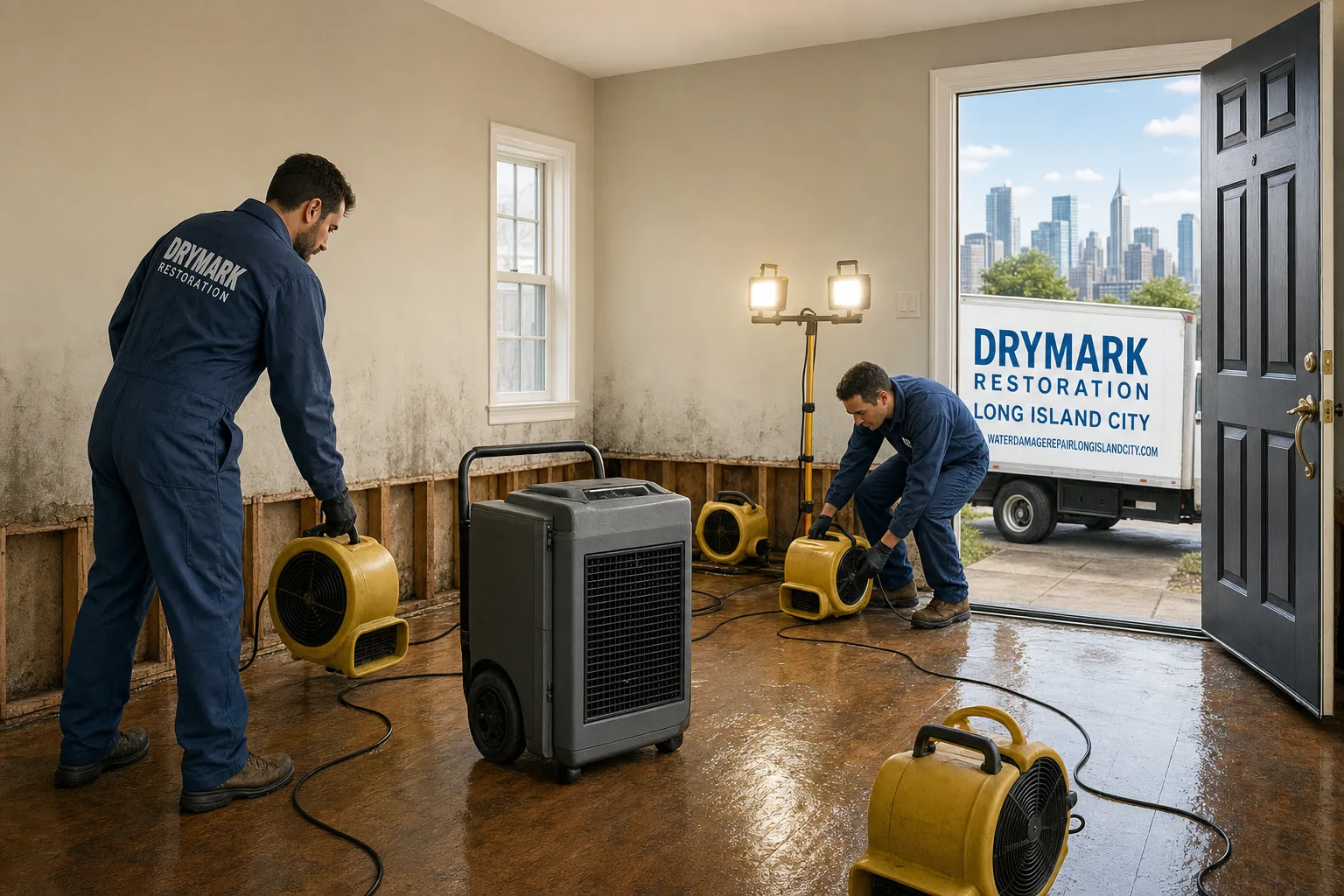
Free visual inspection and a written scope of work before any mitigation begins - photos, moisture readings, and drying logs go in your claim file
The scope we write is the scope we bill. Anything new gets shown to you, in writing, before we touch it.
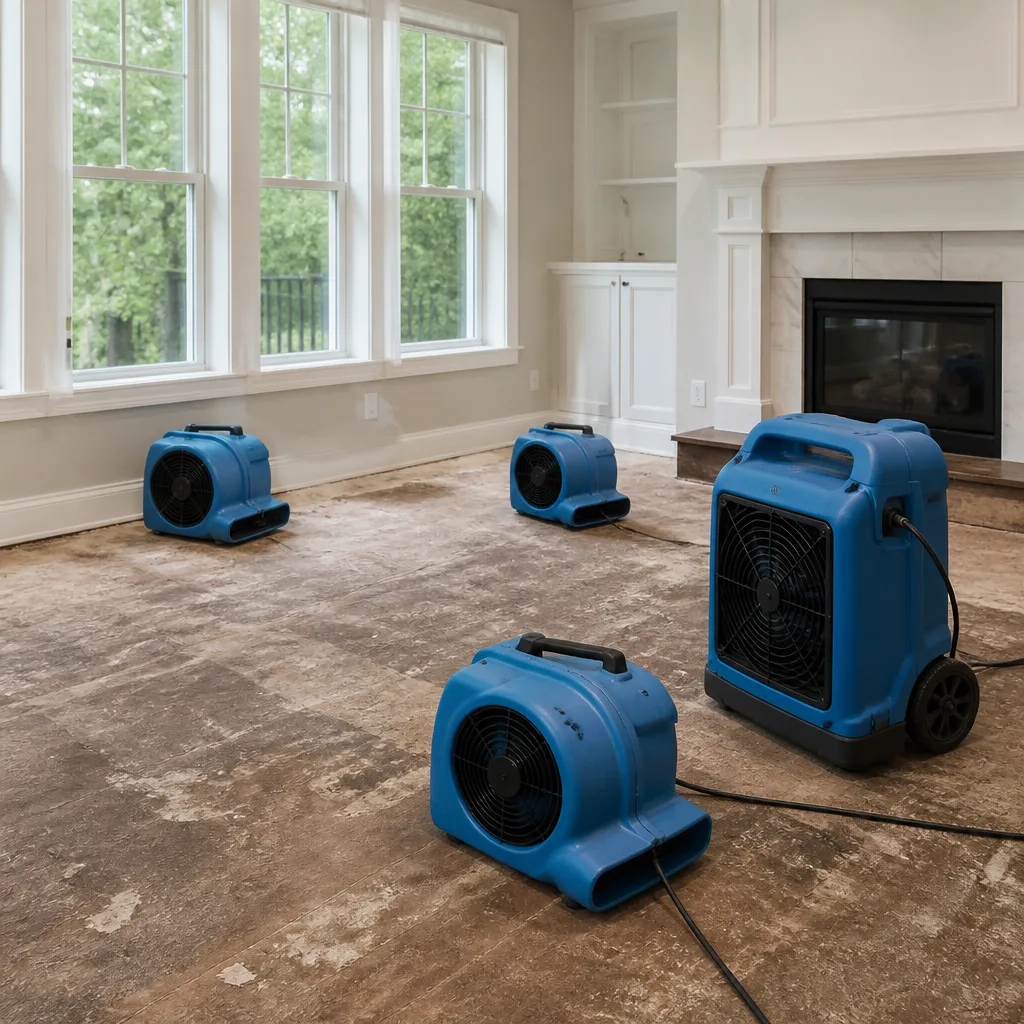

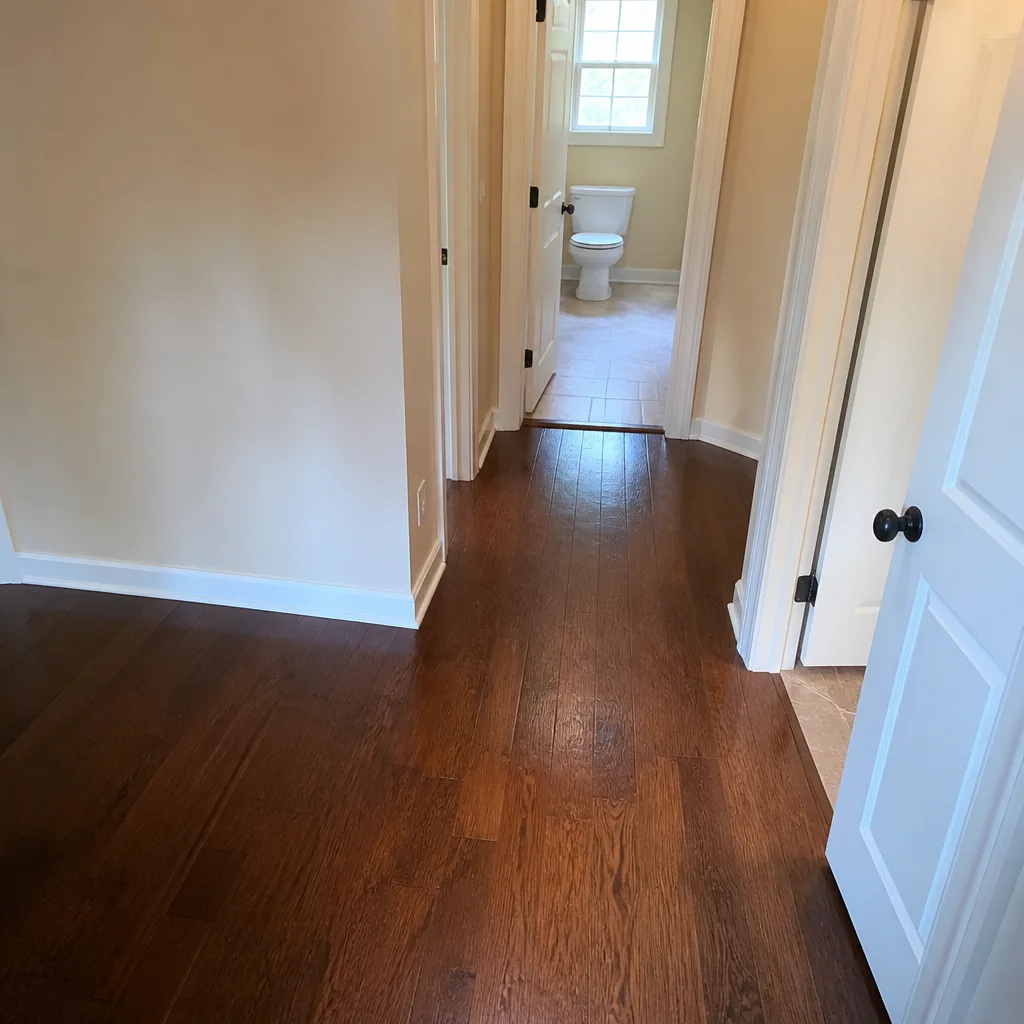
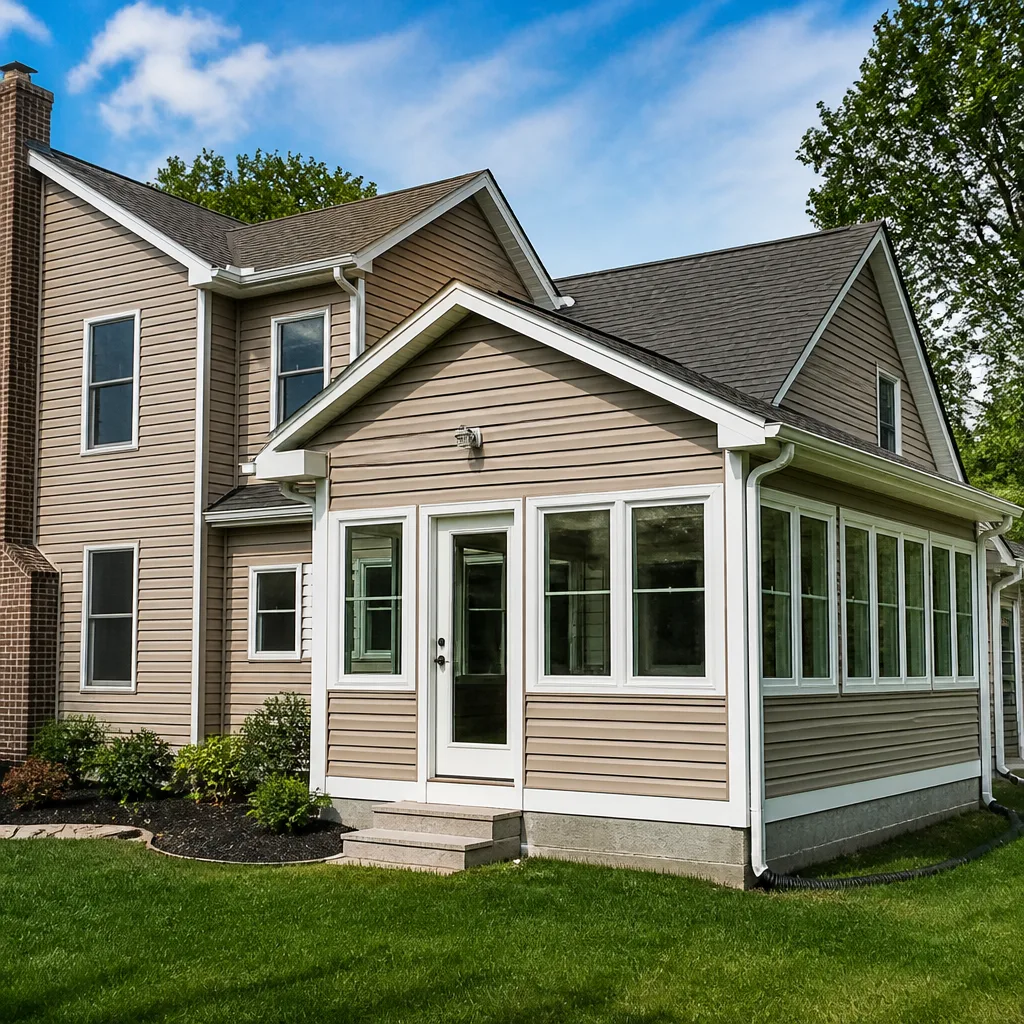
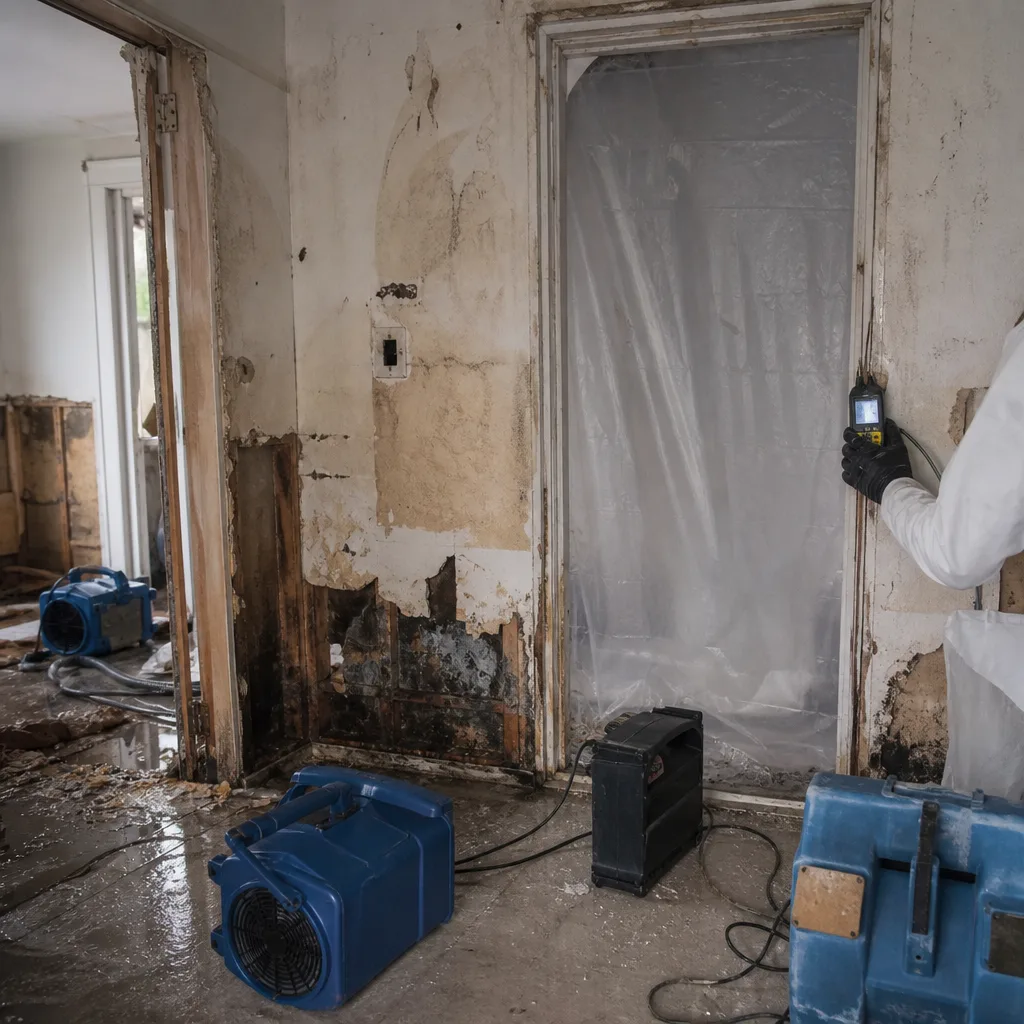 Before
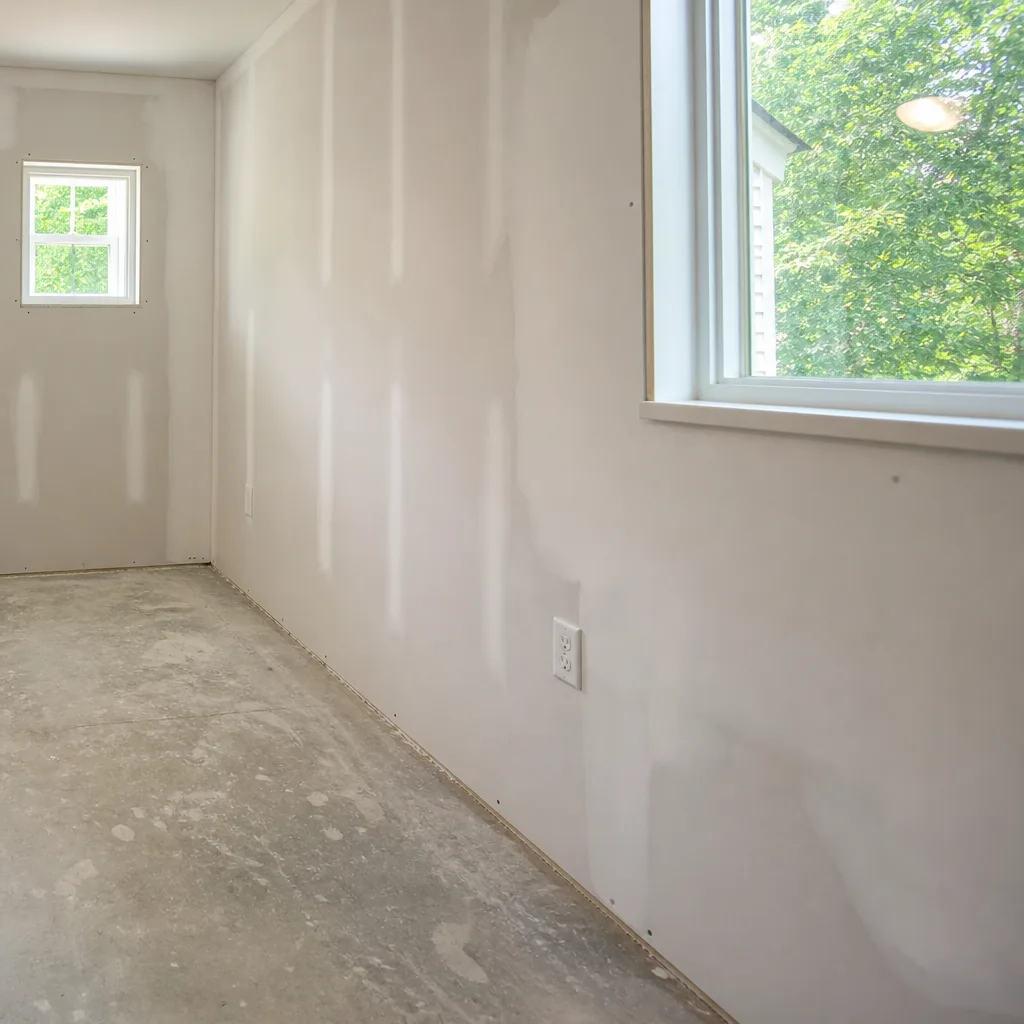
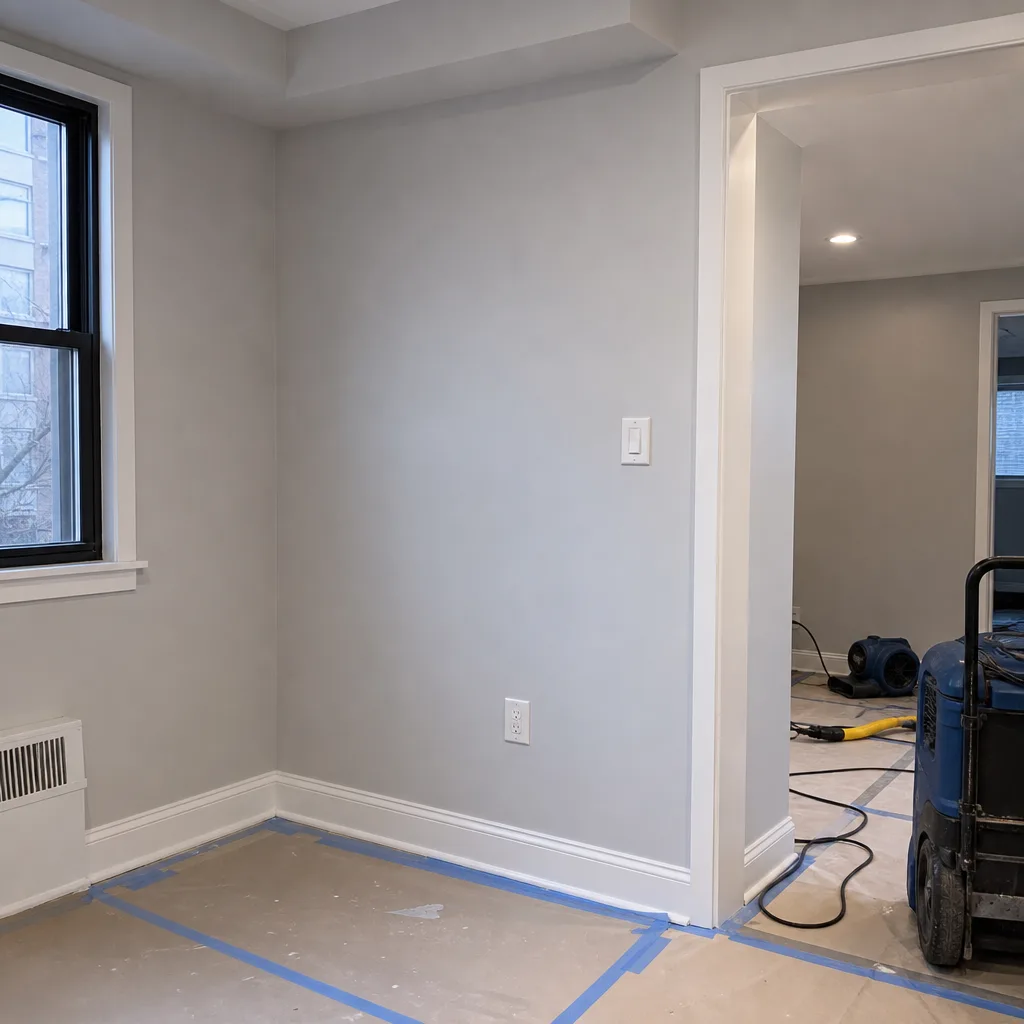 After
After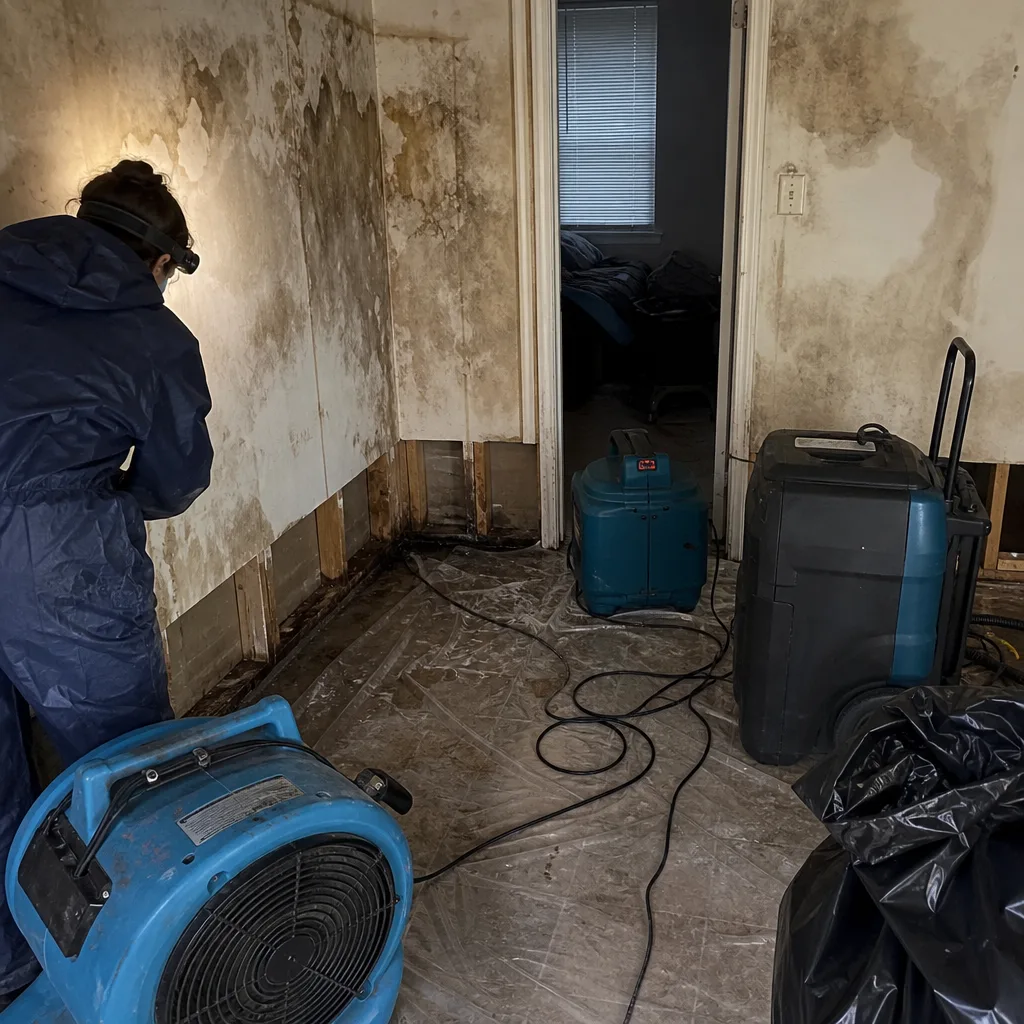 Before
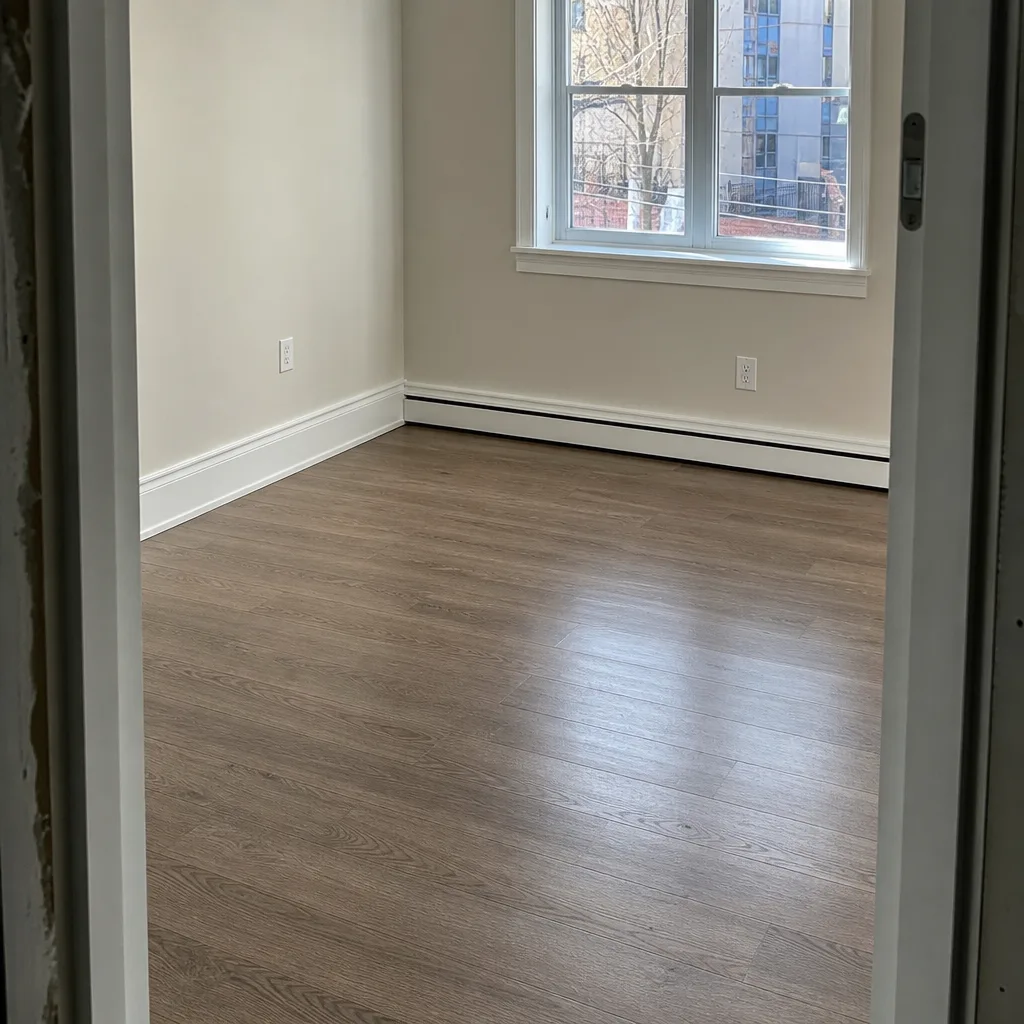 After
After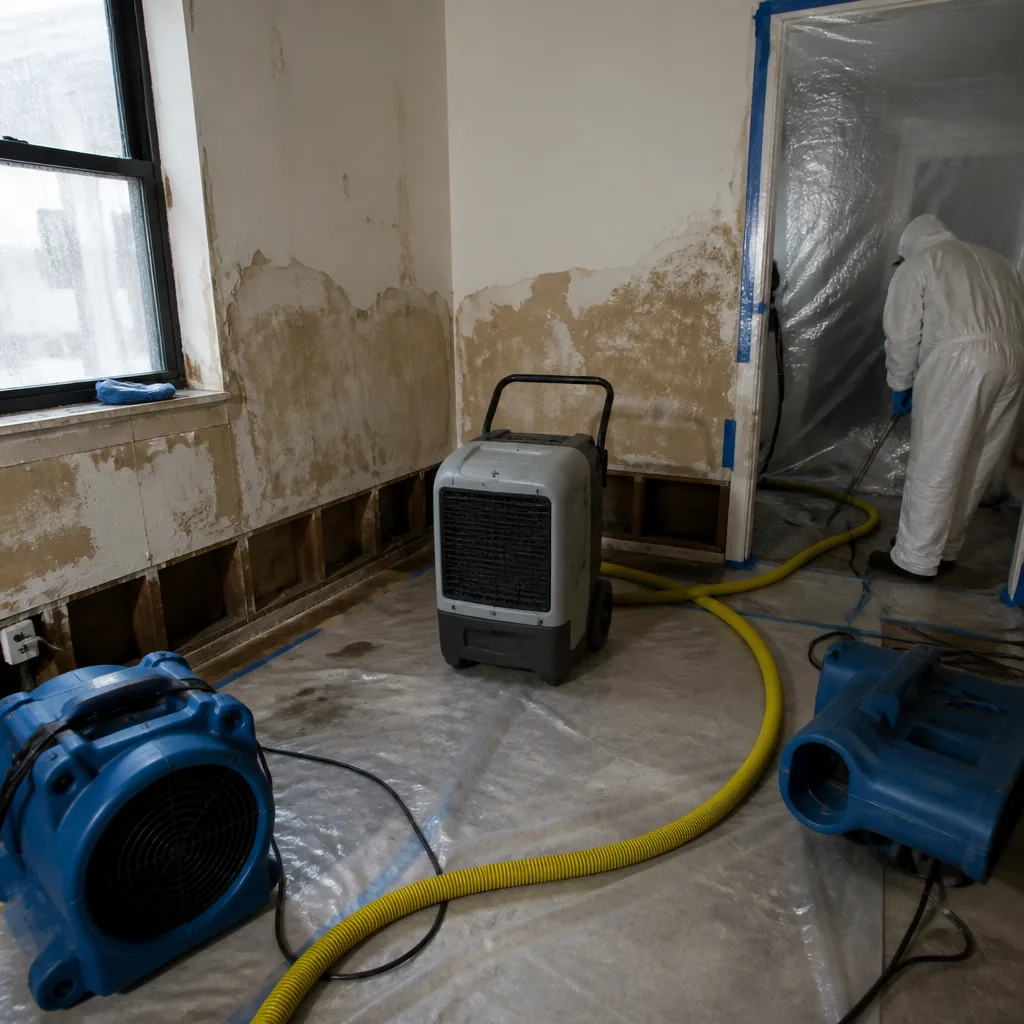 Before
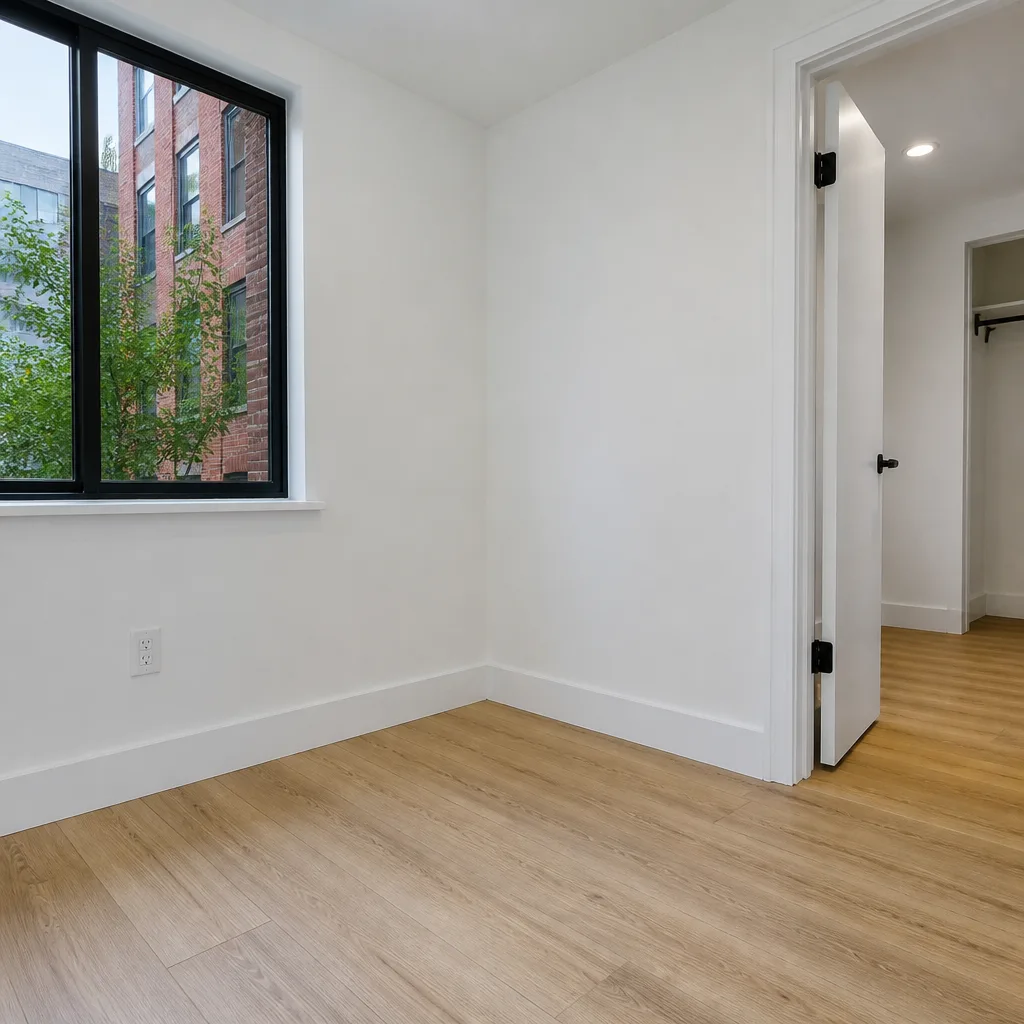 After
AfterFast, Reliable Fire & Smoke Damage Restoration Across Long Island City
Fire and smoke damage restoration in Long Island City typically costs $3,200-$8,500 for a residential unit, with emergency board-up and tarping starting at $850 and full contents pack-out running $1,800-$4,200 depending on square footage and contamination level. Most Long Island City properties we see require 5 to 14 days for complete smoke and soot remediation, though converted warehouse lofts with asbestos-containing materials add 3 to 5 days for abatement before restoration work can begin. Call (914) 530-9723 for a written estimate before any work starts - Haven Standard, Clause 1.
We know Long Island City’s building stock because we’ve restored units from the converted brick warehouses along Jackson Avenue to the glass towers rising above the Queensboro Bridge approach. Our crews are dispatched from our New York City office and carry the documentation tools - moisture meters, thermal cameras, photo logs - that turn restoration invoices into payable insurance claims. When a kitchen fire in a Queens Plaza loft sends smoke through a cast-iron plumbing chase into your neighbor’s unit, you need a crew that understands how these buildings were originally constructed, not just how they look after renovation.
Why DryMark Restoration Long Island City Is Long Island City’s Preferred Fire & Smoke Damage Restoration Company
We’ve restored fire-damaged properties across every Long Island City neighborhood, from the prewar lofts of Hunters Point to the amenity-heavy towers along Center Boulevard and the mixed-use corridors near Court Square. Our reputation here is built on documentation: every job gets a written price before work begins, a photo record on every visit, and daily drying logs that adjusters recognize and pay without dispute.
Homeowners in Long Island City leave reviews that mention specifics - “they found smoke damage in the HVAC chase the insurance inspector missed,” or “the written scope matched the final invoice exactly.” That precision matters in a market where units sell for seven figures and buyers conduct forensic inspections before closing. Our 365-Day Done Right Promise, backed by The Haven Standard, means if odor returns or finish work fails, we return and make it right. No verbal assurances. A signed guarantee.
Response time to Long Island City averages 45 to 90 minutes for emergency board-up and tarping, depending on bridge traffic and time of day. We maintain live phone coverage 24 hours a day, 7 days a week - no voicemail trees, no next-business-day callbacks while your unit takes on secondary water damage from firefighting efforts or weather intrusion through broken windows.
Local expertise here means knowing which buildings on 44th Drive still contain original 1920s fireproofing, which post-Sandy towers have flood-vulnerable amenity levels despite their “resilient” marketing, and how to coordinate with the New York City Department of Buildings and FDNY for permit-compliant abatement and reconstruction. That knowledge saves days on every timeline and prevents the regulatory violations that delay insurance settlements.
Our Fire & Smoke Damage Restoration Services in Long Island City
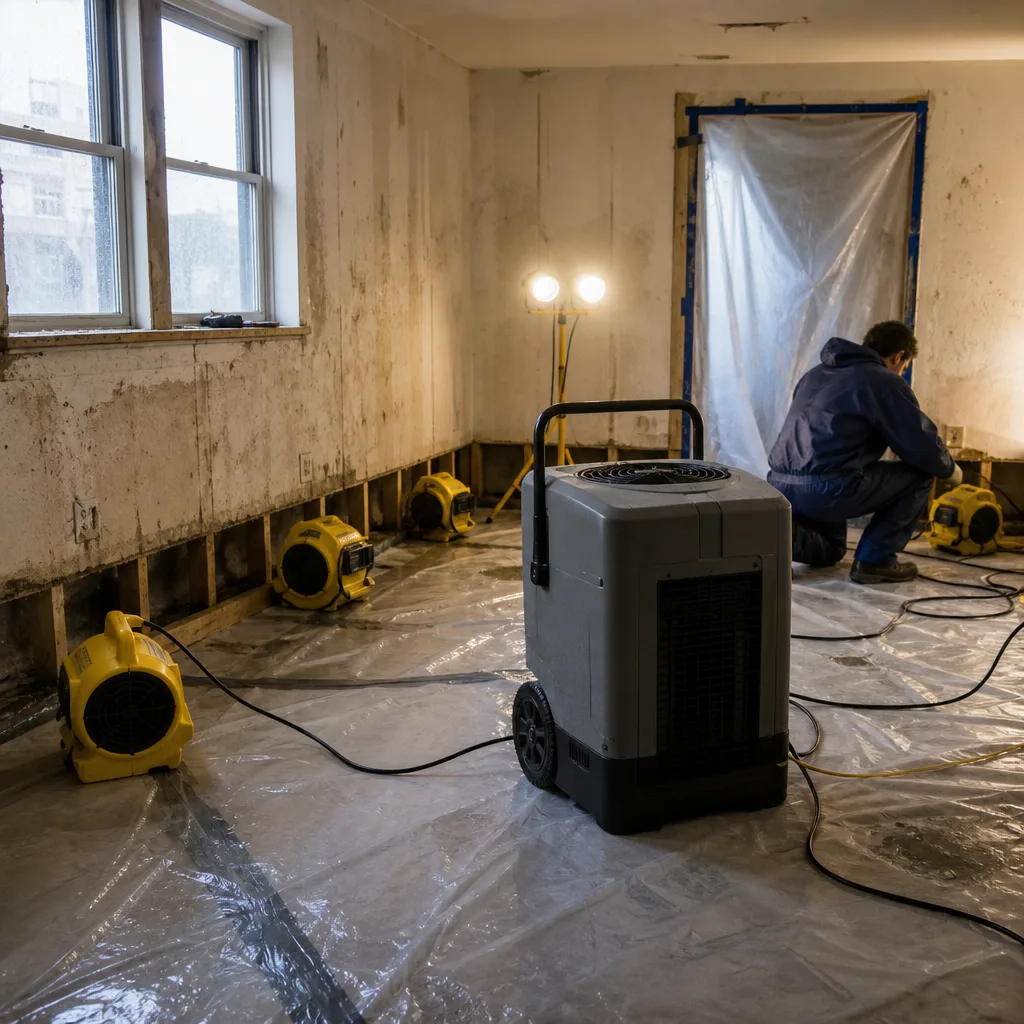
Fire Damage Cleanup
Fire damage cleanup in Long Island City begins with containment and assessment, but the real work varies dramatically by building type. In converted warehouse lofts near the waterfront, we routinely encounter asbestos-containing materials in original fireproofing and pipe insulation that must be abated before charred surfaces can be cleaned or evaluated - a step modern high-rises simply don’t require. Our crews are licensed for this work and document every containment barrier, air-monitoring result, and waste manifest to IICRC and RIA standards. We use professional-grade equipment from Dri-Eaz and Phoenix for negative-air containment and HEPA filtration during abatement, then transition to structural cleaning and preparation for reconstruction. Every phase is photo-documented and written into the scope you approve before work proceeds.
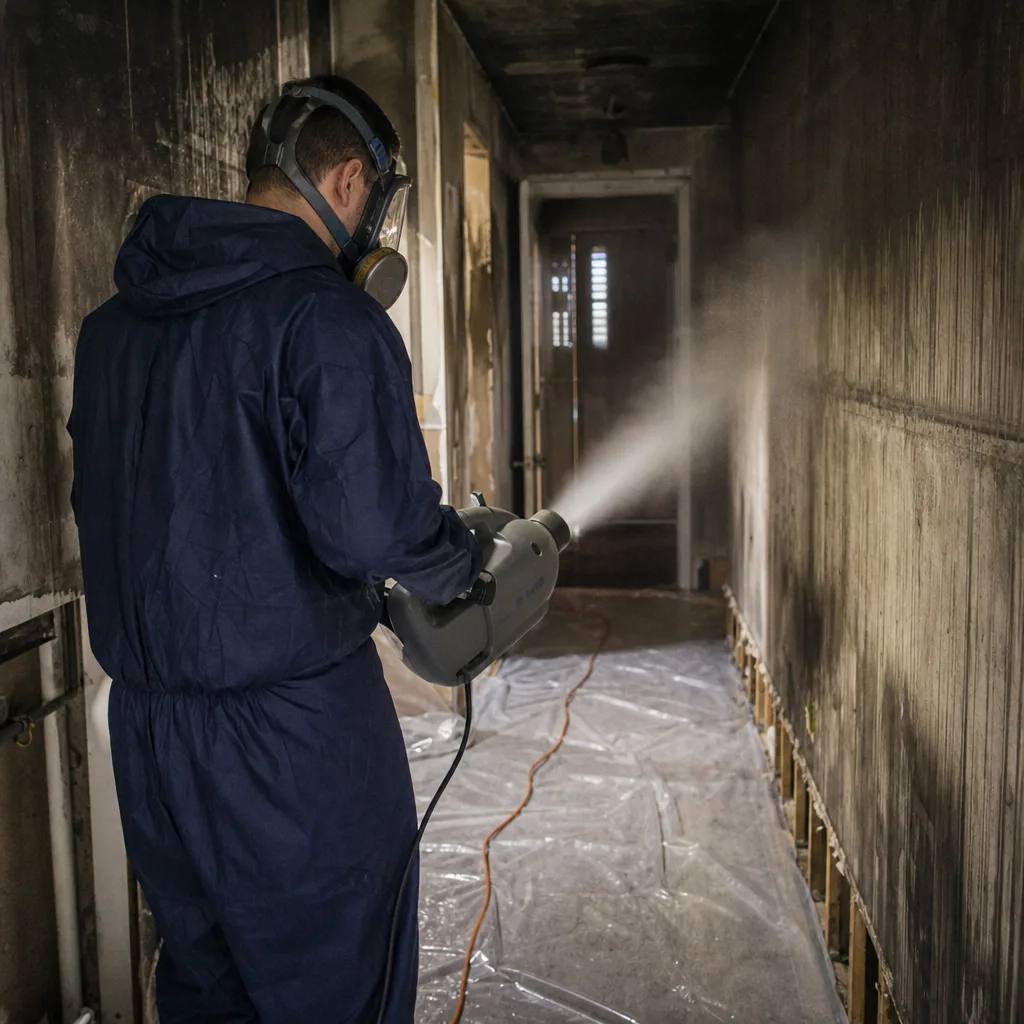
Smoke & Soot Removal
Smoke and soot removal demands different protocols for Long Island City’s two dominant housing types. In prewar loft conversions, alkaline dry-sponge cleaning and HEPA vacuuming must wait until asbestos abatement clears the surface; rushing this sequence creates regulatory violations and health hazards. In post-2010 luxury towers, smoke often concentrates in elevator shafts, mechanical chases, and amenity levels where synthetic materials produce wet, oily soot that smears with standard dry-cleaning methods. We identify the smoke type - dry, wet, protein, or fuel-oil - before selecting cleaning chemistry, then document the pre-loss condition of every surface with photographs that protect both homeowner and adjuster. Our Fire & Smoke Damage Restoration team carries the full range of chemistries and tools for both building types, with no guesswork about what your specific property requires.
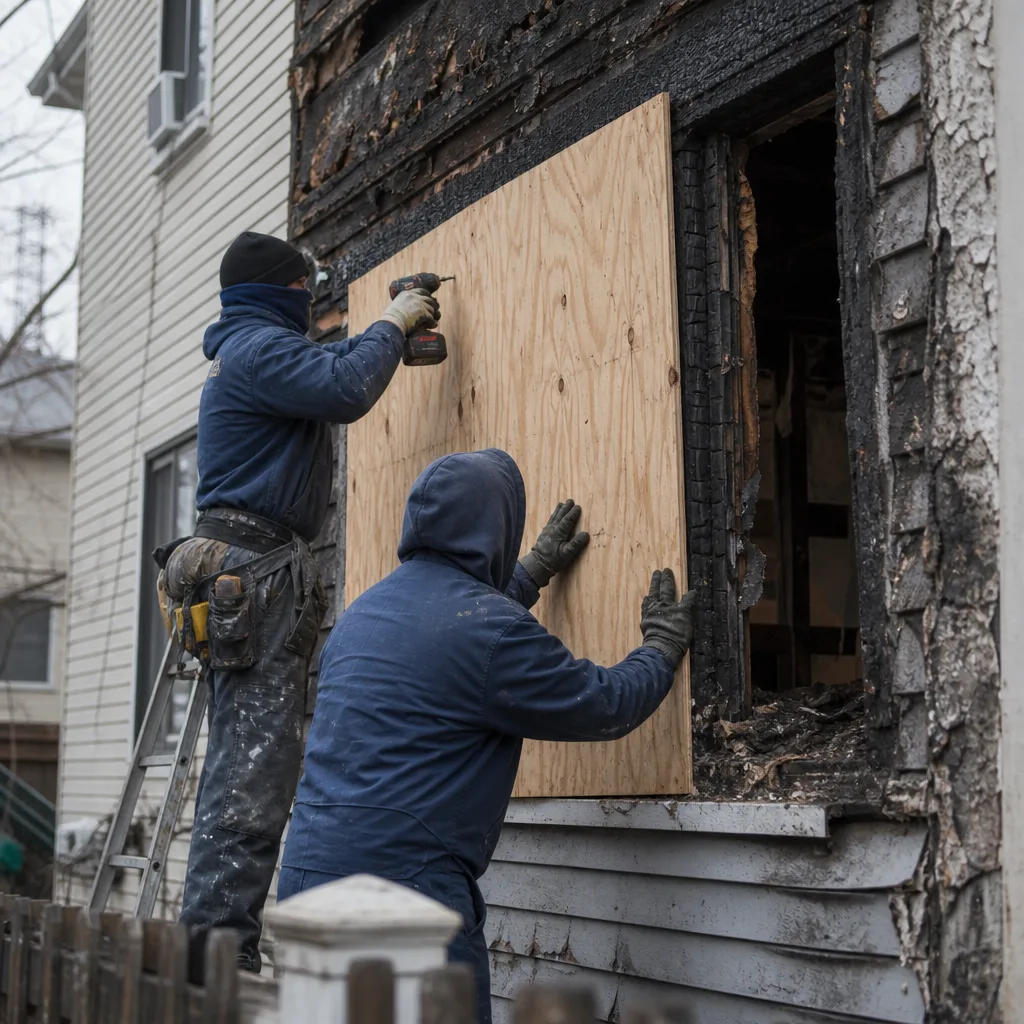
Odor Removal & Deodorization
Odor removal in Long Island City lofts often fails because contractors miss the migration pathways. Smoke travels through original cast-iron plumbing chases, unsealed concrete slabs, and shared wall cavities in ways that standard surface deodorization cannot reach. We were called to a converted factory loft near Queens Plaza where a kitchen blaze had charred the exposed brick and custom walnut cabinetry. After our crew set up containment, performed Emergency Board-Up & Tarping on the shattered window, and completed a full contents pack-out, we found the smoke odor had penetrated the building’s original concrete slab and adjoining unit through a shared plumbing chase. We used Injectidry mats to dry the slab after antimicrobial treatment and thermal fogging, then restored the unit with matched reclaimed wood trim so the pre-loss condition was indistinguishable from the neighbor’s untouched loft. That level of finish matching is standard for us, not exceptional.
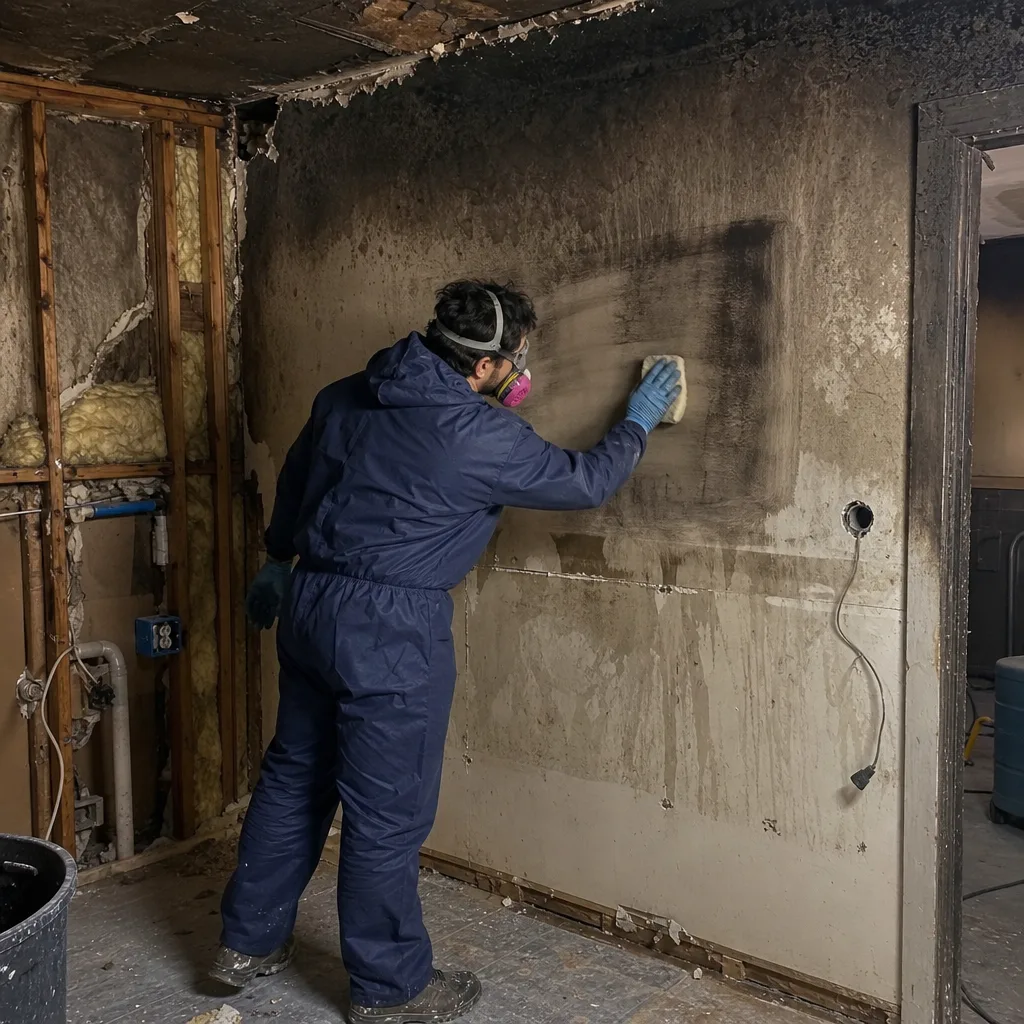
Contents Cleaning & Pack-Out
Contents pack-out after a Long Island City fire requires inventory precision that most homeowners don’t expect until they need it. We photograph every item before removal, document its condition and location, and transport cleanable contents to our facility for ultrasonic, ozone, or specialized textile cleaning depending on contamination type. Non-restorable items are inventoried for insurance replacement with manufacturer, model, and approximate age - the documentation adjusters need to approve full replacement value rather than depreciated cash payouts. For high-end Long Island City lofts with custom furniture, art collections, or integrated smart-home systems, we coordinate with specialized conservators and electronics restoration vendors, managing the entire process under a single written scope with no surprise additions. Haven Standard, Clause 1: the price you approve before work starts is the price you pay.
What happens when you call
- 1
A real person answersNo phone trees - you reach a local pro.
- 2
You get an upfront price rangeHonest numbers before anyone is dispatched.
- 3
A background-checked tech heads outLicensed & insured, dispatched right away.
- 4
You approve before work beginsNothing starts until you say go.
BeforeAfterTrusted Brands We Service in Long Island City
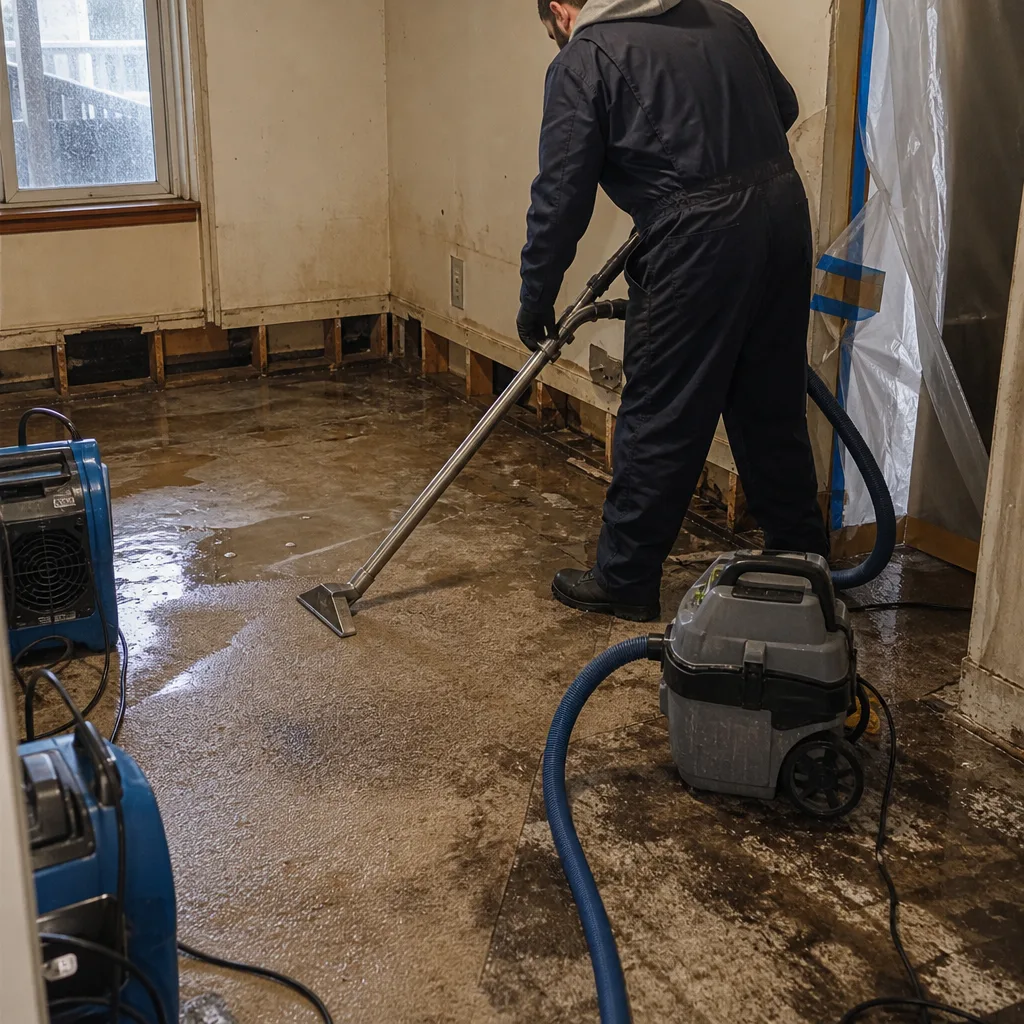
Our Long Island City crews deploy professional-grade drying and deodorization systems from Dri-Eaz, Phoenix, and XPOWER, documented to IICRC, RIA, and IFA standards. These aren’t marketing names - they’re the machines that produce the psychrometric data, vapor pressure differentials, and daily moisture logs that transform restoration invoices into payable insurance claims. We stock HEPA filtration units, hydroxyl generators, and thermal foggers sized for both compact loft studios and full-floor luxury units, with the CFM capacity to handle open-concept layouts common in converted industrial buildings. Equipment is selected and documented for each job’s specific square footage, contamination class, and drying target, with readings recorded daily and shared with your adjuster on request.
Common Fire & Smoke Damage Restoration Problems We See in Long Island City Homes
- Smoke migration through cast-iron plumbing chases. Original cast-iron waste lines in prewar loft conversions create continuous vertical passages between units. Smoke enters these chases at any penetration point and reappears in bathrooms or kitchens of neighboring units weeks after surface cleaning appears complete. We map these pathways with borescope inspection before declaring any unit deodorized.
- Asbestos abatement delays in 1920s warehouse conversions. Many Long Island City loft buildings retain original fireproofing, pipe insulation, and joint compound containing asbestos. Fire damage disturbs these materials, triggering regulatory requirements that add 3 to 5 days to any timeline. Contractors who skip this step create liability for homeowners and violations that halt insurance settlements.
- Category 3 water contamination from firefighting runoff. Even small fires in waterfront buildings near Newtown Creek or the East River produce Category 3 black water conditions when firefighting water mixes with groundwater, sewage, or industrial contaminants from below-grade infiltration. Standard water extraction and drying protocols are insufficient; full antimicrobial treatment and biohazard documentation are required.
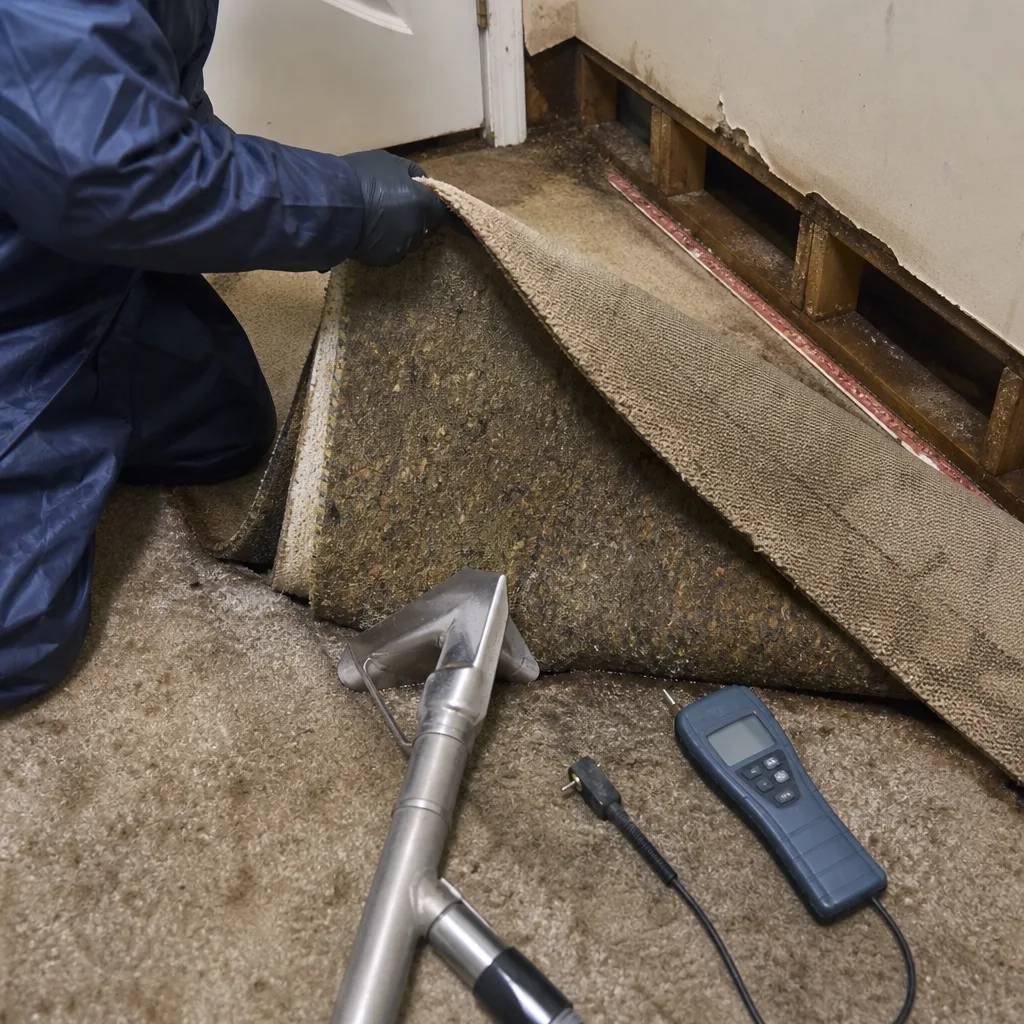
- Mold growth in wall cavities from unaddressed firefighting moisture. Charred wood framing inside walls provides ideal substrate for mold colonization when firefighting water isn’t fully extracted and dried within 24 to 48 hours. We moisture-map every affected cavity with thermal imaging and document readings below 16% wood moisture content before closing any wall.
Pricing for Fire & Smoke Damage Restoration in Long Island City, NY
Emergency board-up and tarping in Long Island City runs $850-$1,400 for a standard residential unit, with after-hours or high-access-difficulty situations at the upper end. Smoke and soot removal for a one-bedroom loft typically costs $2,800-$4,500; two-bedroom units or those with extensive custom finishes range $4,500-$7,200. Contents pack-out and cleaning adds $1,800-$4,200 depending on volume and specialty items. Full structural repair and reconstruction, including finish matching to pre-loss condition, ranges $8,500-$25,000+ for significant damage.
What moves a Long Island City job toward the higher end: asbestos-containing materials requiring licensed abatement, smoke migration into adjacent units expanding the containment area, Category 3 water from firefighting runoff demanding full antimicrobial protocols, and custom or reclaimed materials requiring specialized sourcing. We deliver a written price before any work begins, every time, with no scope-creep additions once the crew is inside - Haven Standard, Clause 1. Free Second Opinion on any competitor’s written estimate: bring their quote and we’ll review it at no charge. Call (914) 530-9723.
We Also Serve Cities Near Long Island City
Our crews respond daily across western Queens and into Manhattan, including Fire & Smoke Damage Restoration in Long Island City and neighboring Astoria, Elmhurst, New York, and Manhattan. Building types vary - Astoria’s prewar apartments, Elmhurst’s mid-century brick co-ops, Manhattan’s high-rise density - but our documentation-first approach and written-price guarantee apply uniformly. Dispatch and scheduling are coordinated from our New York City office; crews serve each locality with the equipment and local knowledge appropriate to that market.
Serving Long Island City, NY - Our Local Coverage Area
We’re based in the Long Island City area and know this community well. Use the map below to see our service coverage - if you’re nearby, we can almost certainly help.
FAQs - Fire & Smoke Damage Restoration in Long Island City
Converted warehouse lofts typically add 3 to 5 days for asbestos abatement of original 1920s fireproofing and pipe insulation before smoke residue can even be assessed, while modern high-rises contain no such materials and move directly to cleaning and deodorization. The cast-iron plumbing chases and unsealed concrete slabs in prewar buildings also require borescope inspection and specialized odor treatment that post-2010 construction simply doesn’t need. Call (914) 530-9723 for a written timeline specific to your building - estimates are free.
Yes, and we see this regularly in Long Island City’s converted industrial buildings where smoke travels through shared cast-iron plumbing chases, unsealed concrete slabs, and wall cavities to reappear in adjacent units weeks after the original fire is cleaned. Surface deodorization of the fire unit alone guarantees recurrence; we map migration pathways with borescope inspection and treat every affected chase and cavity before certifying the building deodorized. Our 365-Day Done Right Promise covers any return odor at no charge.
Waterfront luxury towers concentrate mechanical systems, amenity floors, and parking garages in below-grade spaces vulnerable to storm-surge flooding and Category 3 water contamination even from small fires, while loft conversions present asbestos and odor-migration challenges in their original construction. Post-Sandy towers along Northern Boulevard and Queens Plaza corridors also show a consistent pattern: flood barriers protect mechanical rooms but not ground-floor lobby entrances, so amenity levels still require full gut-and-replace after significant surge events. We price and document for these building-specific risks in every written scope.
Every item is photographed, inventoried with location and condition notation, and transported to our facility for assessment and appropriate cleaning - ultrasonic for hard goods, ozone or textile-specific methods for fabrics, and conservator coordination for art or electronics. Non-restorable items receive replacement documentation with manufacturer, model, and age for insurance submission. You receive a complete photo record and inventory report as standard deliverables, never as upsells. The process typically takes 2 to 4 days for a one-bedroom Long Island City unit.
Yes, because Newtown Creek’s EPA Superfund-designated industrial contamination and combined sewer overflow outfalls routinely mix into groundwater and firefighting runoff in this near-sea-level neighborhood, converting even minor water intrusion into Category 3 black water requiring full biohazard decontamination protocols. This dual-waterway exposure - East River to the west, Newtown Creek to the north - places large swaths of Long Island City inside FEMA Flood Zones AE and X, making Category 3 classification the safe assumption for any below-grade or ground-floor fire damage. We document water classification with laboratory confirmation and treat accordingly, protecting both health outcomes and insurance coverage. Call (914) 530-9723 for immediate assessment.
Written by Alicia Brennan, Owner at Back to Dry Restoration, serving Long Island City since 2011.